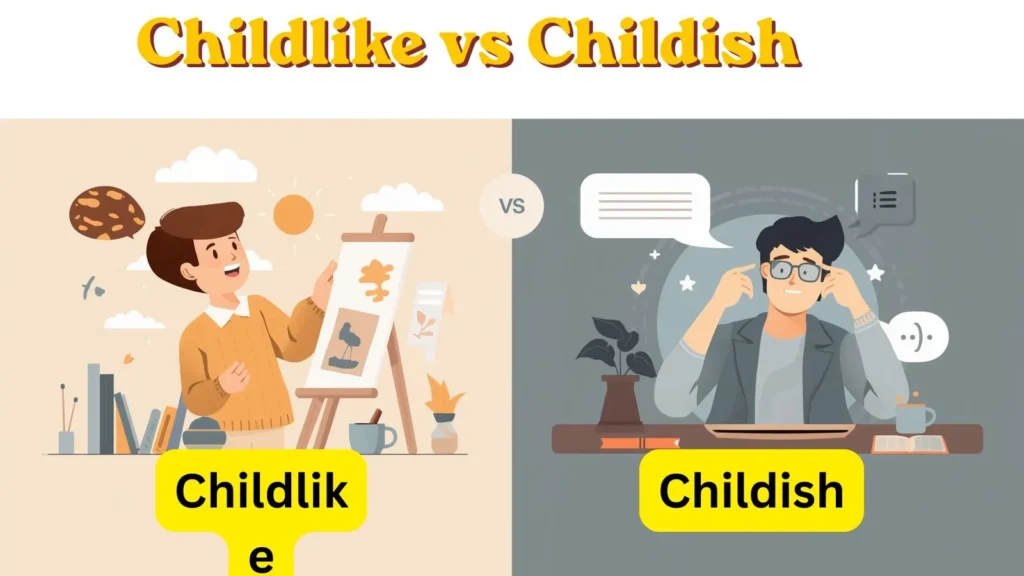
Many people search for “Childlike vs Childish” because the two words look similar but have very different meanings. Both words come from the word “child,” yet one is usually positive while the other is often negative. This can confuse writers, students, and even native English speakers.
For example, if someone says, “She has a childlike wonder,” it sounds warm and positive. But if they say, “He is being childish,” it sounds critical. Small word changes can completely change the tone of a sentence.
Understanding the difference helps you write clearly in emails, school work, social media posts, and professional communication. It also helps you avoid awkward mistakes that may make your writing sound rude or unclear.
|RELATED: Pricy or Pricey: Which Spelling Is Correct in Modern English?
Childlike vs Childish – Quick Answer
“Childlike” is positive. It describes good qualities linked to children, such as innocence, curiosity, wonder, or joy.
“Childish” is negative. It describes immature or silly behavior.
Examples
- Childlike:
“The artist kept a childlike sense of imagination.” - Childish:
“The argument was childish and unnecessary.”
Simple Difference
| Word | Meaning | Tone |
|---|---|---|
| Childlike | Innocent, joyful, curious | Positive |
| Childish | Immature, silly, rude | Negative |
The Origin of Childlike vs Childish
Both words come from the Old English word “cild,” meaning “child.”
The endings create different meanings:
- -like means “similar to.”
- -ish often means “having qualities of,” sometimes in a negative way.
History of “Childlike”
“Childlike” appeared later in English writing. Writers used it to praise pure and innocent behavior. It became common in literature and poetry.
History of “Childish”
“Childish” has existed for centuries. Over time, it gained a more negative meaning. People used it to describe behavior that lacked maturity.
Why the Difference Exists
English often changes meaning through suffixes. Even though the root word is the same, the ending changes the emotional tone.
Compare:
| Word | Positive or Negative |
|---|---|
| Boyish | Often positive |
| Foolish | Negative |
| Childlike | Positive |
| Childish | Negative |
British English vs American English Spelling
Unlike many English words, “childlike” and “childish” have the same spelling in both British and American English.
There is no spelling difference between the two regions.
Examples
| British English | American English |
|---|---|
| childlike | childlike |
| childish | childish |
Comparison Table
| Feature | Childlike | Childish |
|---|---|---|
| British Spelling | Childlike | Childish |
| American Spelling | Childlike | Childish |
| Meaning | Innocent and pure | Immature behavior |
| Tone | Positive | Negative |
Although the spelling stays the same, usage style may vary slightly by culture and context.
|See more: Cite vs Site vs Sight: What’s the Difference
Which Spelling Should You Use?
Since the spelling does not change between British and American English, your choice depends on meaning, not region.
Use “Childlike” When:
- You want a positive tone
- You describe creativity or wonder
- You praise innocence or joy
Example
“The teacher had a childlike excitement about science.”
Use “Childish” When:
- You criticize behavior
- You describe immaturity
- You point out rude actions
Example
“The online comments were childish.”
Audience-Based Advice
| Audience | Best Choice |
|---|---|
| US readers | Use standard meanings |
| UK readers | Use standard meanings |
| Global audience | Keep tone clear with examples |
Common Mistakes with Childlike vs Childish
Many writers mix these words because both relate to children.
Mistake 1: Using “Childish” as a Compliment
❌ “She has a childish sense of wonder.”
✅ “She has a childlike sense of wonder.”
Mistake 2: Using “Childlike” for Bad Behavior
❌ “His childlike reaction upset everyone.”
✅ “His childish reaction upset everyone.”
Mistake 3: Thinking They Mean the Same Thing
They are not synonyms.
- “Childlike” = positive
- “Childish” = negative
Quick Correction Tip
Ask yourself:
“Is this quality good or immature?”
If good → use childlike.
If immature → use childish.
Childlike vs Childish in Everyday Examples
In Emails
- “Your childlike creativity makes the team stronger.”
- “Please avoid childish comments during meetings.”
In News Writing
- “The actor kept a childlike enthusiasm for storytelling.”
- “The debate became childish very quickly.”
On Social Media
- “I still feel childlike joy during holidays.”
- “The replies were childish and rude.”
In Formal Writing
- “The painting reflects a childlike view of nature.”
- “The report criticized the leader’s childish behavior.”
Childlike vs Childish – Google Trends & Usage Data
Search interest for “Childlike vs Childish” is common in:
- United States
- United Kingdom
- Canada
- Australia
- India
People usually search this keyword because they want:
- Correct grammar
- Better writing
- Tone clarification
- Professional communication help
Usage Context
| Word | Common Context |
|---|---|
| Childlike | Art, creativity, imagination |
| Childish | Arguments, behavior, criticism |
General Trend
- “Childish” appears more in negative discussions and news.
- “Childlike” appears more in literature, psychology, and inspirational writing.
Comparison Table: Childlike vs Childish
| Feature | Childlike | Childish |
|---|---|---|
| Meaning | Innocent and joyful | Immature and silly |
| Tone | Positive | Negative |
| Common Use | Creativity, wonder | Bad behavior |
| Professional Tone | Acceptable praise | Often criticism |
| Example | “Childlike curiosity” | “Childish argument” |
FAQs About Childlike vs Childish
Is “childlike” a compliment?
Yes. “Childlike” is usually positive. It suggests innocence, joy, or creativity.
Is “childish” always negative?
Most of the time, yes. It usually describes immature behavior.
Can adults be described as childlike?
Yes. Adults can have childlike curiosity, imagination, or happiness.
Can “childish” ever be positive?
Rarely. In casual speech, someone may use it jokingly, but it is normally negative.
Why do people confuse childlike and childish?
The words share the same root word, “child,” but their endings change the meaning.
Are the spellings different in British and American English?
No. Both regions use the same spelling.
Which word is better in professional writing?
Use “childlike” for praise and “childish” only when criticism is necessary.
Conclusion
Understanding the difference between “childlike” and “childish” is important for clear communication. Even though the words look similar, they create very different feelings.
“Childlike” is positive and warm. It describes innocence, imagination, curiosity, and joy. Writers often use it to praise creativity or emotional openness. In contrast, “childish” has a negative tone. It points to immature or silly behavior that people usually dislike.
The good news is that the spelling stays the same in both British and American English, so you only need to focus on meaning and tone. A simple way to remember the difference is this: if the behavior sounds good or inspiring, use “childlike.” If it sounds immature or rude, use “childish.”
Using the correct word helps you sound more professional, thoughtful, and accurate in emails, essays, social media posts, and everyday conversation. Once you understand the tone behind each word, choosing the right one becomes easy.

Hi, I’m Mason Clark, the writer behind Wordspry!
My goal is to make grammar learning easier with straightforward explanations, useful examples, and engaging English lessons that help you grow every day.