Quick answer:
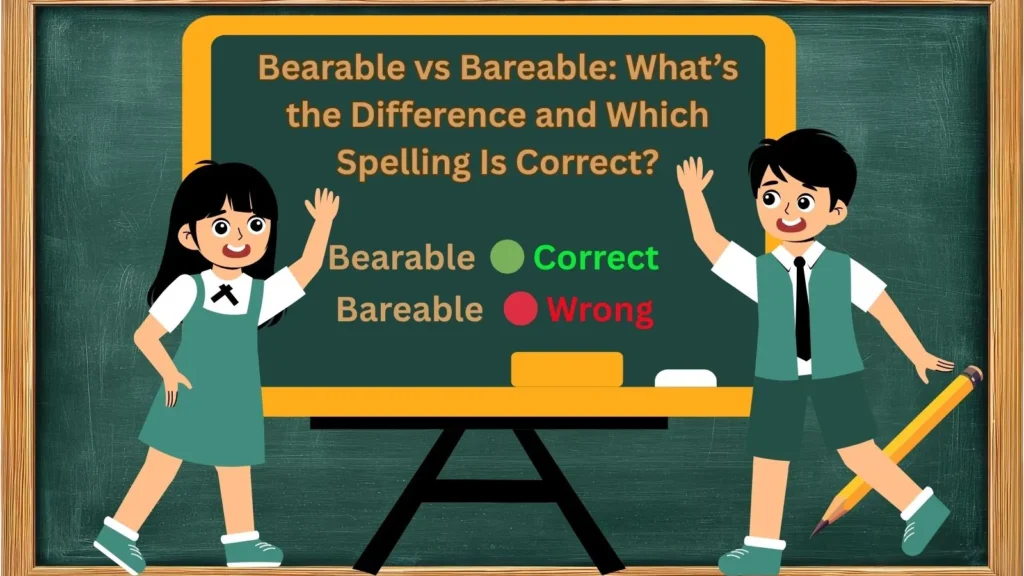
Bearable is the correct English word. Bareable is usually a spelling mistake.
You type, “The heat today was barely bearable.” But then your spell checker underlines bareable. Many people stop and wonder: is it bearable or bareable?
This confusion is very common. The words sound almost the same. Also, the word bare is a real English word, so many people think bareable should also be correct. But in standard English, only bearable is accepted.
The word bearable means something you can handle, accept, or tolerate. Pain, weather, stress, or noise can all be bearable. The spelling bareable does not exist in formal dictionaries. People mainly search for “bearable vs bareable” to check the correct spelling and avoid mistakes in writing.
RELATED: Sleave or Sleeve: What Is the Correct Word and How to Use It?
Pronunciation
| Word | US Pronunciation | UK Pronunciation |
|---|---|---|
| Bearable | /ˈber.ə.bəl/ | /ˈbeə.rə.bəl/ |
| Bareable | Usually pronounced the same as “bearable” | Usually pronounced the same as “bearable” |
Difference Between Bearable vs Bareable
1. Correctness
Bearable is correct English.
Bareable is not standard English.
Examples:
- The pain became bearable after medicine.
- The weather is bearable today.
- Incorrect: The pain became bareable.
- Incorrect: The weather is bareable.
2. Meaning
Bearable means something you can tolerate.
Bareable has no accepted meaning.
Examples:
- Her sadness was bearable with support.
- The loud music was still bearable.
- Incorrect: The sadness was bareable.
- Incorrect: The noise was bareable.
3. Word Origin
Bearable comes from the verb “bear,” meaning “to carry” or “to endure.”
Bareable wrongly connects to “bare.”
Examples:
- He could barely bear the heat.
- The wait was bearable.
- Incorrect: He could barely bare the heat.
- Incorrect: The wait was bareable.
4. Dictionary Status
Bearable appears in dictionaries.
Bareable does not.
Examples:
- You can find bearable in Oxford Dictionary.
- Teachers accept bearable in essays.
- Bareable is marked incorrect.
- Bareable is not formal English.
5. Use in Writing
Bearable is used in books, news, and schools.
Bareable is mostly a typo.
Examples:
- The article described the pain as bearable.
- The teacher used the word bearable.
- The article did not use bareable.
- Schools do not teach bareable.
6. Grammar Acceptance
Grammar tools accept bearable.
flag bareable in grammar tools
Examples:
- Grammarly accepts bearable.
- Spell check accepts bearable.
- Grammarly marks bareable wrong.
- Spell check underlines bareable.
7. Professional Usage
Professionals use bearable in formal writing.
Bareable looks careless.
Examples:
- The injury was bearable.
- The stress became bearable.
- Incorrect: The injury was bareable.
- Incorrect: The stress became bareable.
8. Reader Understanding
Readers understand bearable quickly.
Bareable may confuse readers.
Examples:
- The situation was bearable for workers.
- The cold became bearable indoors.
- Bareable may confuse students.
- Bareable looks strange to readers.
9. Frequency
Bearable is common worldwide.
Bareable is rare.
Examples:
- Bearable appears in novels.
- Bearable appears online often.
- Bareable appears mostly in mistakes.
- Bareable is uncommon.
10. Educational Use
Teachers teach bearable as correct.
Bareable is corrected in exams.
Examples:
- Students learn the word bearable.
- Bearable appears in grammar books.
- Teachers correct bareable.
- Exams mark bareable wrong.
See also: Hierarchical vs Hierarchal: Which Word Should You Use?
Nature and Behaviour of Bearable vs Bareable
Bearable
Bearable is an adjective. It describes pain, stress, weather, sound, or emotions that can still be handled. It often appears in daily speech and formal writing.
Examples:
- The noise became bearable.
- Her sadness was bearable with time.
Bareable
Bareable is not a proper English word. People usually write it by mistake because of the word bare.
Examples:
- Incorrect: The heat was bareable.
- Incorrect: His pain was bareable.
Why People Get Confused About Bearable vs Bareable
People get confused because both spellings sound alike. English has many silent letter patterns. Also, the word bare is real, so learners think bareable should also work.
Another reason is typing speed. Many people write quickly and do not notice the mistake.
Comparison Table
| Feature | Bearable | Bareable |
|---|---|---|
| Correct spelling | Yes | No |
| Dictionary word | Yes | No |
| Meaning | Able to be tolerated | No accepted meaning |
| Formal usage | Yes | No |
| Common in books | Yes | Rare |
| Accepted in school | Yes | No |
| Used worldwide | Yes | Mostly typo |
| Grammar approved | Yes | No |
The Origin of Bearable vs Bareable
The word bearable comes from the Old English word “beran,” meaning “to carry” or “to endure.” Over time, English speakers used bearable to describe something that could be endured.
The spelling bareable likely appeared because people mixed up bear and bare. Since both words sound similar, spelling mistakes became common online.
RELATED: Casi Algo Meaning: Full Guide to Love, Feelings, and Relationships
British vs American English
Both British and American English use bearable.
There is no major spelling difference between the two forms.
British English Examples
- The weather is bearable today.
- The journey was bearable.
American English Examples
- The pain became bearable.
- The heat feels bearable now.
Bareable is incorrect in both styles.
Which One Should You Use?
Use bearable in all situations.
For US English
Use bearable.
For UK English
Use bearable.
For Global English
Use bearable because it is accepted everywhere.
Avoid bareable in essays, emails, reports, and social media posts.
Common Mistakes
| Wrong Form | Correct Form |
|---|---|
| The heat is bareable. | The heat is bearable. |
| Her pain was bareable. | Her pain was bearable. |
| The noise became bareable. | The noise became bearable. |
| This job is barely bareable. | This job is barely bearable. |
Everyday Usage Examples
Emails
- The delay was bearable after the update.
- The workload is still bearable.
Social Media
- This summer heat is barely bearable!
- The traffic today was not bearable.
News
- Officials said the situation was bearable.
- The costs remain bearable for families.
Formal Writing
- The symptoms became bearable after treatment.
- The conditions were difficult but bearable.
Usage Trends
Bearable is widely used across the world. It appears in books, blogs, schools, and news reports.
Bareable mostly appears in typing mistakes and online errors. Search engines often redirect users from bareable to bearable.
Metaphors and Similes
Metaphors
- The silence was a bearable prison.
- His stress became a bearable weight.
Similes
- The pain felt as bearable as a mild headache.
- The cold was bearable like a cool evening breeze.
Connotative Meaning
Positive Meaning
- The workload became bearable after help.
- The journey felt bearable with friends.
Negative Meaning
- The pain was only barely bearable.
- The noise remained bearable but annoying.
Neutral Meaning
- The weather was bearable today.
- The delay seemed bearable.
Idioms and Proverbs
“Bear the burden”
Meaning: handle a difficult problem.
Sentence: She had to bear the burden alone.
“I can’t bear it”
Meaning: unable to tolerate something.
Sentence: I can’t bear the loud noise anymore.
These idioms connect to the same root word as bearable.
Literature and Movies
Literature
Writers often use bearable in drama and fiction to describe pain or struggle.
Example:
- Psychological fiction by Virginia Woolf often explores emotions that characters find barely bearable.
Movies
Films also use the word in emotional scenes.
Examples:
- The Revenant (USA, 2015)
- Life Is Beautiful (Italy, 1997)
Both films show hardship that characters try to endure.
Why This Difference Matters
Correct spelling matters because it helps clear communication. Using bearable shows strong English skills. Using bareable may make writing look careless or confusing.
For students, correct spelling improves grades. Workers, it builds trust in emails and reports. For society, good language helps people share ideas clearly.
Usefulness in Daily Life
Knowing the correct spelling helps in:
- School assignments
- Office emails
- Social media posts
- Job applications
- Academic writing
- Online communication
It also improves confidence in English writing.
Situational Preference
In every situation, bearable is the better choice because it is the accepted English spelling. Use it when talking about pain, weather, stress, emotions, or difficult situations. It works well in both casual and formal writing. Teachers, editors, and employers expect this spelling. Avoid bareable because readers may think it is a mistake. In social media, people may still understand your meaning, but the spelling still looks incorrect. In school essays, professional reports, and business emails, always choose bearable. This helps your writing look polished, clear, and professional across all English-speaking countries.
FAQs
Is bareable a real word?
No. It is considered a spelling mistake.
Which spelling is correct?
Bearable is correct.
Why do people write bareable?
People confuse it with the word bare.
Does bearable mean easy?
Not always. It means something can still be tolerated.
Is bearable used in British English?
Yes. Both British and American English use it.
Can I use bareable in formal writing?
No. Avoid it in all formal writing.
How can I remember the correct spelling?
Think of the verb “bear,” which means “endure.”
Conclusion
The confusion between bearable vs bareable is very common, but the rule is simple. Bearable is the correct spelling, while bareable is considered incorrect in standard English. The word bearable means something that can be endured, tolerated, or handled. It comes from the verb “bear,” which means to carry or endure hardship.
People often make this mistake because bear and bare sound alike. English spelling can also feel tricky at times. Still, remembering the meaning behind the word makes the correct form easier to use.
Whether you are writing an email, school paper, social media caption, or business report, always choose bearable. It is accepted in British English, American English, and global English. Avoiding bareable will make your writing look cleaner and more professional.

Hi, I’m Liam Harper, the voice behind Wordspry!
I’m here to make English grammar simple, clear, and easy to understand for learners of all levels. Through practical lessons and helpful guides, I aim to help you improve your writing and communication skills with confidence.