Have you ever typed pricy and wondered if it should really be pricey?
Many writers pause at this word because both spellings appear online. Some dictionaries list one form, while blogs and social media often show the other. That creates confusion for students, bloggers, business owners, and even professional writers.
Standard English, pricey is the correct and widely accepted form.
The spelling pricy exists, but it is much less common in professional usage.
This guide explains the correct spelling, meaning, examples, and proper usage in modern writing.
RELATED: Blatantly vs Bluntly – Which Word Should You Really Use?
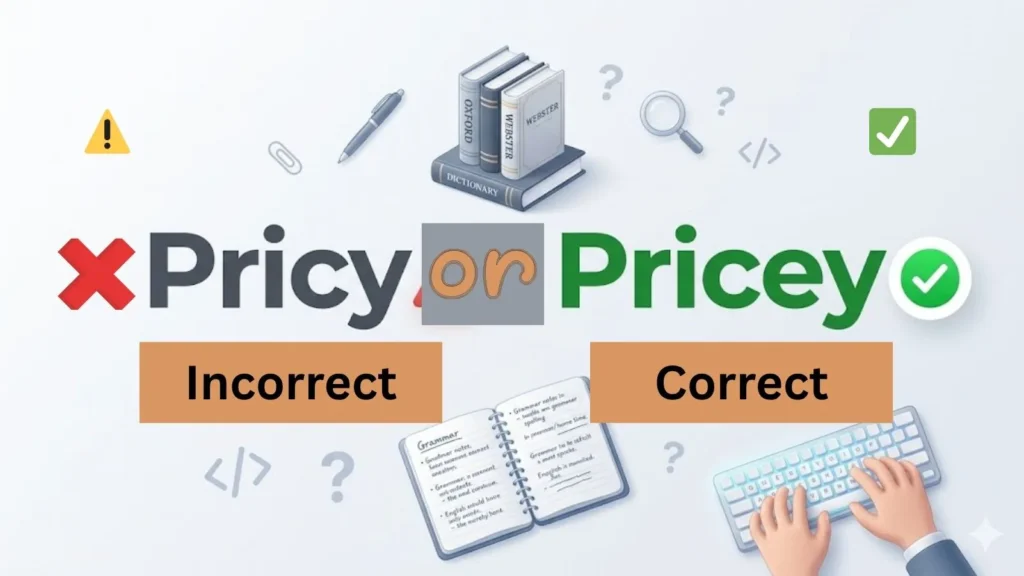
Pricy or Pricey – Quick Answer
The correct and most accepted spelling is pricey.
The spelling pricy exists, but it is less common and often considered a variant spelling.
Examples
This restaurant is very pricey.✅
That laptop looks pricey for students.✅
⚠️ The hotel seems pricy during summer.
Tip:
Most dictionaries, style guides, and professional writers prefer pricey.
| Word | Correct? | Notes |
|---|---|---|
| Pricey | ✅ Yes | Standard modern spelling |
| Pricy | ⚠️ Sometimes | Less common variant |
Synonyms for pricey:
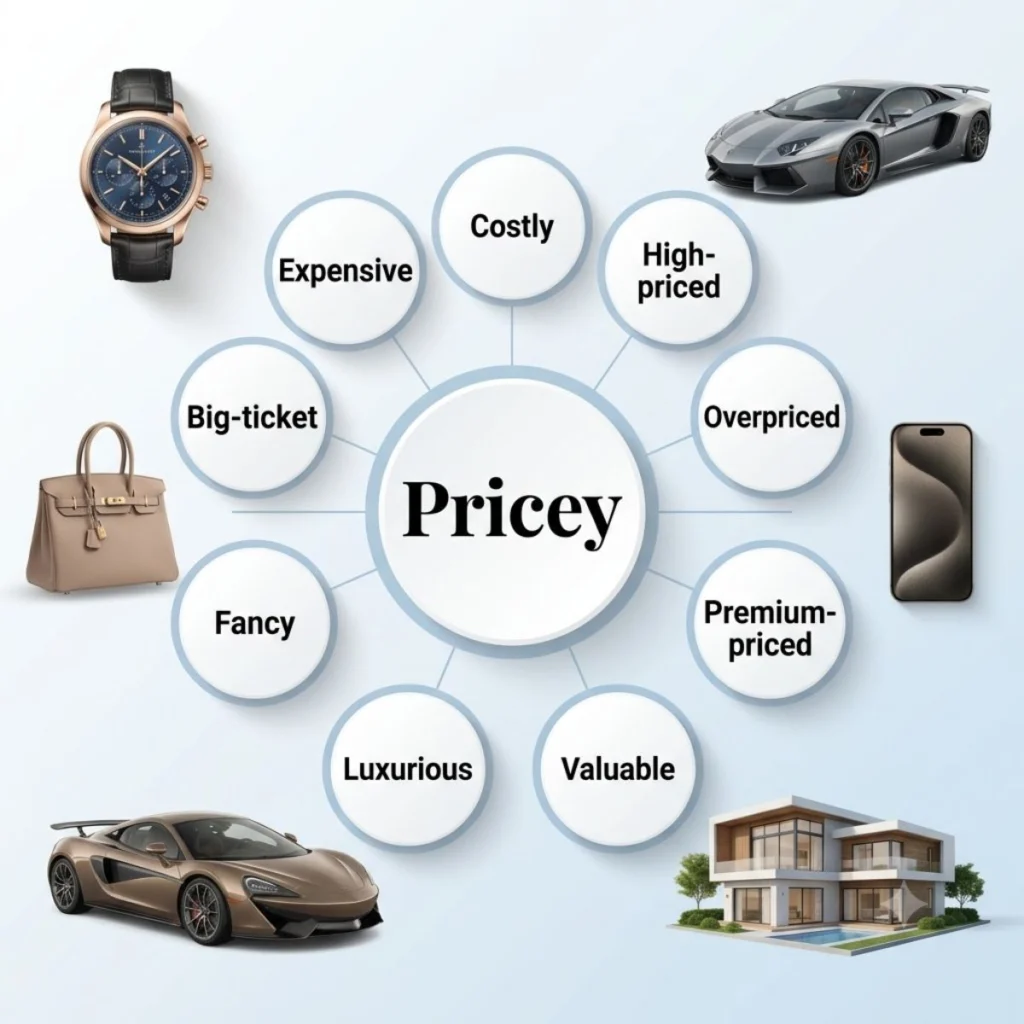
- Expensive
- Costly
- High-priced
- Overpriced
- Premium-priced
- Fancy
- Luxurious
- Valuable
- Dear
- Big-ticket
Example Sentences
- This restaurant is very expensive.
- Luxury watches are often costly.
- That car looks a bit overpriced.
- Designer bags can be extremely high-priced.
The Origin of Pricy or Pricey
The word pricey comes from the noun price. English speakers added the suffix -y to describe something that costs a lot of money.
This style of word formation is common in English:
- Cloud → Cloudy
- Dirt → Dirty
- Ice → Icy
- Price → Pricey
The spelling pricy appeared later as a shortened alternative. Some writers removed the “e” before adding “y.” English spelling rules sometimes allow this change, which is why both forms can be found.
Still, language usage over time favored pricey. Major dictionaries and publications now use it more often than pricy.
British English vs American English Spelling
There is no major regional difference here. Writers in the UK, the US, Canada, and Australia mostly use pricey.
Comparison Table
| Region | Preferred Spelling | Example |
|---|---|---|
| United States | Pricey | Gas is getting pricey. |
| United Kingdom | Pricey | London hotels are pricey. |
| Canada | Pricey | Winter jackets can be pricey. |
| Australia | Pricey | Beach resorts are pricey in summer. |
Why Confusion Happens
People compare this word to others like:
| Base Word | Standard Form |
|---|---|
| Spice | Spicy |
| Ice | Icy |
| Price | Pricey |
Because spicy drops the “e,” some people assume pricy should follow the same rule. English spelling, however, is not always perfectly consistent.
Which Spelling Should You Use?
You should almost always use pricey.
Use “pricey” if:
- You send professional emails
- You write academic work
- You post business content online
Audience-Based Advice
| Audience | Best Choice |
|---|---|
| US readers | Pricey |
| UK readers | Pricey |
| Commonwealth countries | Pricey |
| Global audience | Pricey |
Using pricey keeps your writing clear and professional everywhere.
Common Mistakes with Pricy or Pricey
Many writers confuse these spellings because both appear online.
Frequent Errors
| Incorrect | Correct |
|---|---|
| This car is pricy. | This car is pricey. |
| The tickets were too pricy. | The tickets were too pricey. |
| A pricy smartphone | A pricey smartphone |
Another Common Mistake
Use expensive and pricey in the wrong tone.
- Expensive sounds formal.
- Pricey sounds conversational.
Example
Formal:
✅ The product is expensive.
Casual:
✅ The product feels pricey.
Pricy or Pricey in Everyday Examples
Here are real-life ways people use the word.
In News Writing
✅ “Coffee shops are getting so pricey lately!”
In Formal Writing
✅ “Luxury housing remains pricey in large cities.”
In Product Reviews
✅ “The phone works well, but it feels pricey.”
Pricy or Pricey – Google Trends & Usage Data
Search trends show that pricey is far more popular than pricy.
Writers in the United States, the United Kingdom, Canada, and Australia mainly search for and use pricey.
Usage Comparison
| Spelling | Popularity |
|---|---|
| Pricey | Very High |
| Pricy | Low |
Where “Pricey” Appears Most
- Product reviews
- Shopping blogs
- News articles
- Travel websites
- Social media captions
Why “Pricy” Still Exists
Some people prefer shorter spellings. Others simply guess the spelling based on words like spicy or icy.
Still, professional writing strongly favors pricey.
Comparison Table: Pricy vs Pricey
| Feature | Pricy | Pricey |
|---|---|---|
| Standard English | No | Yes |
| Common in dictionaries | Rarely | Yes |
| Used in professional writing | Less common | Very common |
| Preferred in SEO writing | No | Yes |
| Best for global readers | No | Yes |
FAQs About Pricy or Pricey
Q1. Is “pricy” a real word?
Yes, but it is less common than pricey.
Q2. Which spelling is correct: pricy or pricey?
Pricey is the standard and preferred spelling.
Q3. Do Americans use “pricey”?
Yes. Americans widely use pricey.
Q4. Is “pricy” wrong?
Not completely, but many editors avoid it.
Q5. Why is “pricey” more common?
Major dictionaries and publications prefer it.
Q6. Can I use “pricy” in casual writing?
You can, but pricey is still safer and clearer.
Q7. Which spelling is better for SEO?
Pricey is better because it has stronger search popularity.
Conclusion
The debate around pricy or pricey is simple once you know the standard spelling. While both forms exist, pricey is the clear winner in modern English. It appears more often in dictionaries, news articles, blogs, product reviews, and professional writing.
In short, remember this easy rule:
✅ Pricey = standard and recommended
⚠️ Pricy = uncommon variant

Hi, I’m Henry Collins, the educator behind Wordspry.com
I’m dedicated to helping English learners build confidence through easy grammar explanations, writing tips, and everyday language learning resources.