Quick answer:
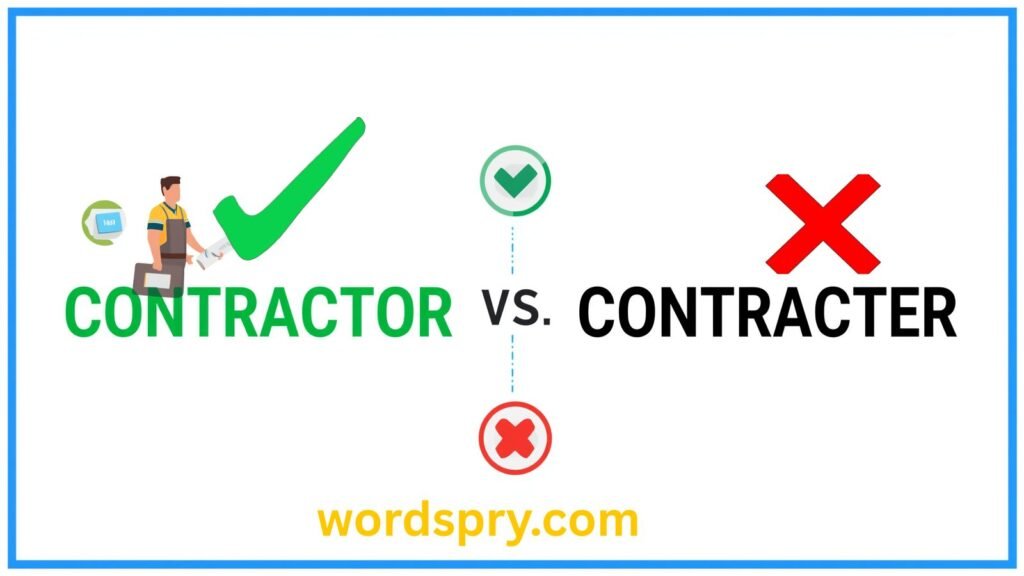
“Contractor” is the correct English word. “Contracter” is usually a spelling mistake or a very rare old form.
Imagine you are writing an email to hire a home builder. You type “contracter” in your message. A red spelling line appears under the word. You stop and wonder: Is it contractor or contracter? Many people face this same problem every day.
The keyword Contractor vs Contracter is popular because both words look very similar. People often hear the word in speech but do not know the correct spelling in writing. This confusion happens in school work, job ads, legal papers, and online searches.
A contractor is a person or company hired to do work under a contract. A contracter is mostly seen as a misspelling in modern English. Learning the difference between Contractor vs Contracter helps you write clearly and professionally. It also saves you from spelling mistakes in formal writing.
Pronunciation
Contractor
- US Pronunciation: /ˈkɑːn.træk.tɚ/
- UK Pronunciation: /ˈkɒn.træk.tə/
Contracter
- US Pronunciation: /kənˈtræk.tər/ (rarely used)
- UK Pronunciation: /kənˈtræk.tə/ (rarely used)
|RELATED: FALSE FLAG: Meaning, Origin, Usage, and Common Writing Mistakes
Difference Between Contractor vs Contracter
1. Correctness
Contractor is the correct spelling in modern English.
Contracter is usually incorrect.
Examples:
- The contractor fixed our roof.
- We hired a contractor for painting.
- Wrong: The contracter fixed our roof.
- Wrong: We hired a contracter for painting.
2. Dictionary Presence
“Contractor” appears in all major dictionaries.
“Contracter” is rare.
Examples:
- Oxford lists “contractor.”
- Cambridge uses “contractor.”
- “Contracter” is hard to find.
- Many dictionaries ignore “contracter.”
3. Professional Usage
Businesses use “contractor.”
Companies avoid “contracter.”
Examples:
- Building contractor needed.
- Government contractor approved.
- Wrong company sign: Best Contracter Ltd.
- Wrong resume title: Civil Contracter.
4. Common Search Usage
People search “contractor” more online.
“Contracter” is often a typo.
Examples:
- Search: plumbing contractor.
- Search: roofing contractor.
- Mistyped: house contracter.
- Mistyped: road contracter.
5. Grammar Acceptance
Teachers accept “contractor.”
“Contracter” is corrected in writing tools.
Examples:
- My teacher wrote “correct.”
- Grammarly accepts “contractor.”
- Spellcheck marks “contracter.”
- Editors change “contracter.”
6. Meaning
“Contractor” means a hired worker or company.
“Contracter” has no common modern meaning.
Examples:
- The contractor built the office.
- A contractor painted the wall.
- “Contracter” confuses readers.
- “Contracter” sounds incorrect.
7. Use in Legal Writing
Legal papers use “contractor.”
“Contracter” is avoided.
Examples:
- Independent contractor agreement.
- Contractor payment form.
- Wrong: Contracter agreement.
- Wrong: Licensed contracter.
8. Use in Job Titles
Real job titles use “contractor.”
“Contracter” is not standard.
Examples:
- Electrical contractor.
- Defense contractor.
- Wrong: Electrical contracter.
- Wrong: Defense contracter.
9. Global Recognition
English speakers know “contractor.”
Few people recognize “contracter.”
Examples:
- US companies use contractor.
- UK builders use contractor.
- “Contracter” looks strange.
- Readers may think it is an error.
10. Spelling Pattern
“Contractor” follows the common “-or” ending.
“Contracter” breaks the usual spelling pattern.
Examples:
- Actor, creator, contractor.
- Sailor, editor, contractor.
- “Contracter” does not fit.
- It looks unnatural in English.
Nature and Behaviour of Contractor vs Contracter
Contractor
“Contractor” is a noun. It names a person or company that does work under a contract. It is professional and widely accepted.
Examples:
- The contractor finished the bridge.
- She works as a building contractor.
Contracter
“Contracter” is mostly treated as a spelling error today. Some old texts may contain it, but modern English rarely uses it.
Examples:
- The website corrected “contracter.”
- My teacher marked it wrong.
Why People Get Confused About Contractor vs Contracter
People hear the word more than they read it. Both words sound alike in fast speech. Also, many English words end in “-er.” Because of this, learners write “contracter” by mistake.
Typing errors also cause confusion. Phones and fast keyboards increase spelling mistakes. Non-native English speakers may also guess the spelling incorrectly.
Comparison Table
| Feature | Contractor | Contracter |
|---|---|---|
| Correct spelling | Yes | Usually no |
| Common in English | Very common | Rare |
| Dictionary accepted | Yes | Mostly no |
| Used in business | Yes | No |
| Used in legal writing | Yes | No |
| Professional look | Professional | Incorrect |
| Meaning | Hired worker/company | Rare or mistaken form |
| Global usage | High | Very low |
| Grammar check | Accepted | Marked wrong |
| Recommended usage | Always | Avoid |
The Origin of Contractor
The word “contractor” comes from the Latin word contractus, which means “agreement.” Later, English created the word “contractor” for a person who works under a contract.
The word became popular during the growth of business and construction industries. Today, it is common in law, building, transport, and government work.
“Contracter” appeared in some old writings, but modern English chose “contractor” as the standard spelling.
British vs American English
Both British and American English use contractor.
American English
- Defense contractor
- Independent contractor
British English
- Building contractor
- Government contractor
The spelling stays the same in both forms of English. “Contracter” is uncommon in both regions.
Which One Should You Use?
Use contractor in all situations. It is correct in the US, UK, Canada, Australia, and other English-speaking countries.
Avoid “contracter” unless you are quoting an old text or showing a spelling mistake.
For global communication, “contractor” is the safest and clearest choice.
Common Mistakes
| Wrong Form | Correct Form |
|---|---|
| Contracter | Contractor |
| Building contracter | Building contractor |
| Road contracter | Road contractor |
| Contracter company | Contractor company |
| Licensed contracter | Licensed contractor |
More Examples
- Wrong: We hired a contracter.
- Correct: We hired a contractor.
- Wrong: She is an electrical contracter.
- Correct: She is an electrical contractor.
Everyday Usage Examples
Emails
- We need a contractor for office repairs.
- The contractor sent the invoice today.
Social Media
- Looking for a good contractor near me.
- Our contractor completed the kitchen remodel.
News
- The contractor won the government project.
- A local contractor repaired the school roof.
Formal Writing
- The contractor must complete the work by June.
- Payment will be released to the contractor.
Usage Trends
“Contractor” is used worldwide every day. It appears in business, law, news, and online searches.
“Contracter” appears mostly as a typo. Search engines often suggest “contractor” instead.
Global English strongly prefers “contractor.”
Metaphors and Similes
Metaphors
- He is the contractor of his own future.
- A good contractor is the backbone of a project.
Similes
- She worked like a skilled contractor.
- He planned the event like a master contractor.
Connotative Meaning
Positive Meaning
- Reliable contractor
- Skilled contractor
Example:
- The contractor saved us time and money.
Neutral Meaning
- Government contractor
- Private contractor
Example:
- The contractor signed the agreement.
Negative Meaning
- Dishonest contractor
- Slow contractor
Example:
- The contractor missed every deadline.
Idioms and Proverbs
There are no famous idioms using “contractor,” but related work sayings exist.
Examples
- “A job worth doing is worth doing well.”
- “Measure twice, cut once.”
Sentences:
- Our contractor believes in “measure twice, cut once.”
- A smart contractor knows a job worth doing is worth doing well.
Literature and Movies
Literature
Construction and business themes often use the word “contractor.”
- The Fountainhead (1943) includes architects and contractors.
- The Grapes of Wrath (1939) discusses labor and work struggles.
Movies
- The Contractor — United States.
- The Contractor — Bulgaria/UK/USA.
Why This Difference Matters
Correct spelling matters in school, business, and online communication. Writing “contractor” shows professionalism and care.
Wrong spelling can confuse readers. It may also hurt trust in resumes, websites, and legal papers.
For English learners, understanding this difference improves vocabulary and writing confidence.
Usefulness in Daily Life
You may need the word “contractor” when:
- Hiring builders
- Writing emails
- Signing agreements
- Reading job ads
- Searching online
Knowing the correct spelling helps you avoid mistakes in daily communication.
Situational Preference
In every normal situation, “contractor” is the better choice. Use it in schools, offices, legal papers, websites, and social media. It is accepted in both British and American English. It also looks professional and correct. “Contracter” should usually be avoided because most readers see it as a spelling mistake. If you write business emails, resumes, or official documents, always choose “contractor.” Even search engines and grammar tools prefer this spelling. Only use “contracter” when discussing old texts, language history, or common spelling errors. For clear and modern English, “contractor” is the right option almost every time.
FAQs
Is “contracter” a real word?
It exists in some rare old uses, but modern English treats it as incorrect.
Which spelling is correct?
“Contractor” is the correct spelling.
Why do people write “contracter”?
People confuse the ending sounds and make typing mistakes.
Is “contractor” used in British English?
Yes. British and American English both use “contractor.”
Can I use “contracter” in formal writing?
No. Avoid it in formal writing.
What does a contractor do?
A contractor does work under a contract.
Does spellcheck accept “contracter”?
Most spellcheck tools mark it as incorrect.
Conclusion
The debate around Contractor vs Contracter is simple once you know the facts. “Contractor” is the correct and standard spelling in modern English. It is used in business, law, construction, and daily communication around the world. “Contracter,” on the other hand, is mostly seen as a spelling mistake or a rare old form.
Many people get confused because both words sound similar. Fast typing and spoken English also increase the mistake. Still, professional writing always prefers “contractor.” Using the correct spelling helps you appear educated, careful, and trustworthy.
By learning the difference between Contractor vs Contracter, you can avoid common writing errors and communicate more clearly every day.

Hi, I’m William Parker, the creator behind Wordspry.com
I enjoy breaking down complex grammar rules into clear and practical lessons that help learners write and speak English more effectively.