Quick answer:
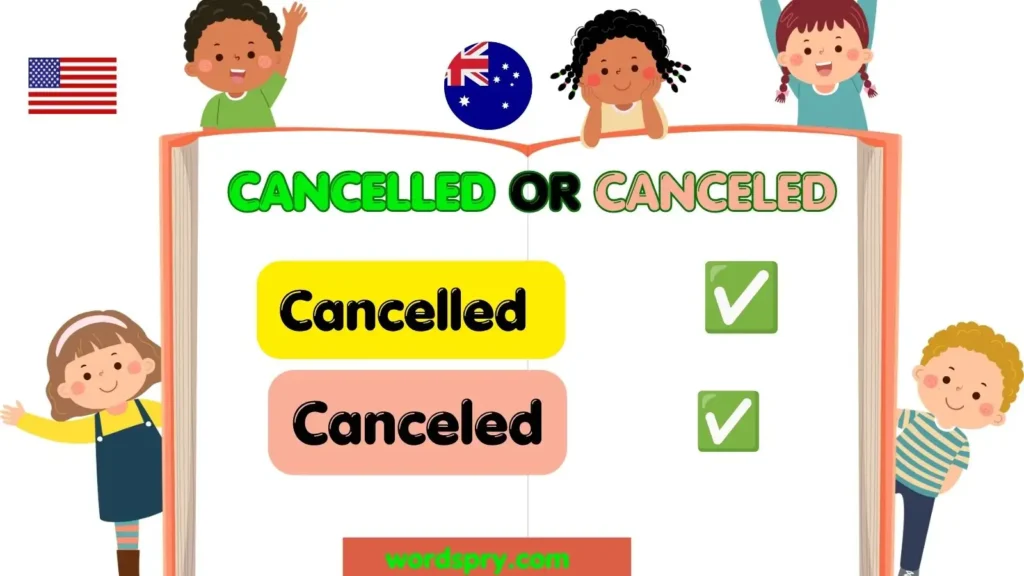
Both “cancelled” and “canceled” are correct, but they follow different English spelling conventions.
If you have ever wondered whether to write cancelled or canceled, you are certainly not alone. The two spellings look almost identical, and both have the same meaning. The main difference comes from British English and American English spelling conventions.
In British English, writers generally use cancelled with two Ls. In American English, writers usually use canceled with one L. The same difference appears in related forms such as cancelling/canceling and cancelled/canceled.
This spelling variation can cause confusion in emails, school assignments, business documents, websites, and everyday messages. However, the rule becomes simple once you know which variety of English you are using.
We will explain the meaning, spelling, pronunciation, usage, related word forms, common mistakes, and differences between cancelled or canceled. You will also find practical examples and an easy way to remember which spelling to choose.
Read: Hierarchical vs Hierarchal: Which Word Should You Use?
Quick Answer
✅ Correct: Cancelled and Canceled
Both spellings are correct.
- Cancelled → standard in British English and many other varieties of English.
- Canceled → standard in American English.
Both mean that something was called off, stopped, or no longer going to happen.
Example:
- British English: The meeting was cancelled.
- American English: The meeting was canceled.
❌ Neither spelling is universally incorrect
Unlike many spelling questions, this one does not have a single wrong answer. Your choice depends mainly on the variety of English you follow.
Meaning of Cancelled and Canceled
Cancelled and canceled are past-tense and past-participle forms of the verb cancel.
The verb cancel means to decide that something planned will not happen, or to stop an existing arrangement.
Example:
- The airline canceled the flight.
- The concert was cancelled because of heavy rain.
- She canceled her appointment.
- The company cancelled the event.
The meaning remains exactly the same regardless of whether you use one L or two.
Common contexts
You can use the word when discussing:
- Meetings
- Flights
- Appointments
- Events
- Classes
- Reservations
- Subscriptions
- Orders
- Plans
- Sports games
Example, The school canceled classes because of the storm means the classes will not take place.
Why People Confuse the Two Spellings
The word cancel ends in L, and different English varieties treat that final consonant differently when adding suffixes.
British English generally doubles the final L:
- cancel → cancelled
- cancel → cancelling
American English usually keeps one L:
- cancel → canceled
- cancel → canceling
Pronunciation does not help much because both forms sound the same.
An easy memory trick
Think:
British = extra L
American = one L
So, if you are writing for a British audience, remember the extra L in cancelled. If you are following American English, use canceled.
Cancelled vs Canceled
| Feature | Cancelled | Canceled |
|---|---|---|
| Correct spelling | ✅ Yes | ✅ Yes |
| Meaning | Called off or stopped | Called off or stopped |
| British English | ✅ Common | Less common |
| American English | Less common | ✅ Standard |
| Standard usage | British/international contexts | American contexts |
| Pronunciation | Same | Same |
The key difference is therefore spelling convention, not meaning.
Both words function as the past tense and past participle of cancel. You should simply remain consistent with the English variety used throughout your writing.
Is “Canceled” Ever Correct?
Yes. Canceled is completely correct in standard American English.
You can use it in:
- Academic writing
- Professional documents
- Business communication
- Emails
- Websites
- News articles
- School assignments
- Official documents
For example:
The university canceled the lecture because the professor was unavailable.
That sentence follows standard American English.
Likewise, cancelled is correct in British English:
The university cancelled the lecture because the professor was unavailable.
Neither version is a spelling mistake when used according to the appropriate convention.
Common Meanings of Cancelled and Canceled
Meaning 1: Something planned will not happen
The most common meaning involves stopping a planned event or activity.
Examples:
- The football match was canceled.
- The concert was cancelled due to bad weather.
Meaning 2: Ending an appointment or reservation
The word can also describe stopping an appointment or booking.
Examples:
- I canceled my doctor’s appointment.
- They cancelled the hotel reservation.
Meaning 3: Ending a service or subscription
You can also use the verb when someone stops a service or membership.
Examples:
- She canceled her streaming subscription.
- The customer cancelled the membership.
Examples in Sentences
Here are natural examples showing how the word works:
- The meeting was canceled because the manager was sick.
- The airline canceled our flight yesterday.
- The school cancelled classes because of the storm.
- I canceled my appointment for Friday.
- They cancelled the outdoor concert.
- The company canceled the product launch.
- She canceled her gym membership last month.
- The train service was canceled without warning.
- We had to cancel our dinner plans.
- The organizers cancelled the event after heavy rain.
- He canceled the reservation before leaving home.
- The university canceled the examination.
- The game was cancelled because of unsafe conditions.
- The customer canceled the order online.
Notice that the choice between cancelled and canceled depends on the English variety, not the sentence’s meaning.
Common Mistakes
Mistake 1: Assuming one spelling is always wrong
❌ Incorrect assumption: Canceled is always wrong.
✅ Correct: Both canceled and cancelled are correct.
American English uses canceled, while British English commonly uses cancelled.
Mistake 2: Mixing spelling systems
❌ The event was cancelled, but the organization uses American English throughout the report.
✅ The event was canceled, but the organization uses American English throughout the report.
Consistency matters in formal writing.
Mistake 3: Writing “canceld”
❌ The flight was canceld.
✅ The flight was canceled.
The word needs the -ed ending after cancel.
Mistake 4: Using “canceling” and “cancelling” randomly
❌ The company is canceling the event in a British English document.
✅ The company is cancelling the event.
American English generally uses canceling, while British English commonly uses cancelling.
Mistake 5: Thinking pronunciation changes
❌ These words have different pronunciations.
✅ Cancelled and canceled are normally pronounced the same.
The difference appears in spelling, not ordinary pronunciation.
Related Word Forms
| Word Form | Example |
|---|---|
| Noun | cancellation — The cancellation surprised everyone. |
| Verb | cancel — We need to cancel the booking. |
| Past tense | canceled/cancelled — They canceled the meeting. |
| Present participle | canceling/cancelling — She is canceling the order. |
| Adjective | canceled/cancelled — The canceled flight caused problems. |
The noun cancellation is worth remembering because it does not follow the same one-L/two-L contrast in the same way.
How to Remember the Correct Spelling
A simple memory trick can make this rule much easier.
Remember “British = Bigger L”
British English commonly doubles the final L:
cancel → cancelled
American English normally keeps one:
cancel → canceled
You can also remember the pattern:
British: cancel → cancelling → cancelled
American: cancel → canceling → canceled
Most importantly, do not worry about the meaning. The meaning stays the same.
British English vs American English
The spelling difference follows a broader pattern in English.
British English often doubles a final L when adding certain endings:
- travelling
- travelled
- cancelling
- cancelled
American English usually keeps one L:
- traveling
- traveled
- canceling
- canceled
Therefore, cancelled is the safer choice when following British spelling conventions, while canceled is the standard choice for American English.
Other English-speaking regions may follow British or American conventions, so check your organization’s preferred style guide when necessary.
Academic and Professional Usage
Both spellings work in formal writing when you follow the correct regional convention.
Schools and universities
British-style assignments may use:
The examination was cancelled because of technical problems.
American-style assignments may use:
The examination was canceled because of technical problems.
Business
Companies should maintain a consistent spelling style in reports, emails, and websites.
For example:
The client canceled the meeting.
This works naturally in American English.
Travel
Travel websites and airlines frequently use the word when describing disrupted services:
Your flight has been canceled.
Government and legal documents
Official writing should follow the organization’s established spelling standard. Neither form is inherently more formal than the other.
Which One Should You Use?
The best choice depends on your audience.
Use cancelled if you are following British English. Use canceled if you are following American English.
If you write for an international website, choose one spelling system and use it consistently. Consistency makes your writing look polished and professional.
Frequently Asked Questions
1. Which spelling is correct, cancelled or canceled?
Both are correct. Cancelled is the common British English spelling, while canceled is the standard American English spelling.
2. Is “cancelled” British or American?
Cancelled is primarily associated with British English. American English normally uses canceled with one L.
3. Is “canceled” an incorrect spelling?
No. Canceled is the standard American English spelling and is fully acceptable in formal writing.
4. What does canceled mean?
Canceled means that something planned will no longer happen, or that an existing arrangement has been stopped. For example, The flight was canceled.
5. Why does British English use “cancelled”?
British spelling conventions commonly double the final L before certain suffixes. That produces cancelled and cancelling.
6. Can I use cancelled in American English?
You can encounter cancelled in American contexts, but canceled is the usual American spelling. For consistent American English, choose canceled.
7. Can I use canceled in British English?
Readers will understand it, but cancelled is the standard British form. If you are writing formal British English, use cancelled.
8. Is the pronunciation different?
No. Cancelled and canceled normally have the same pronunciation. The difference is mainly written.
9. What is the noun form of cancel?
The noun is cancellation. For example: The cancellation of the flight caused major delays.
10. How can I remember the difference?
Remember “British = Bigger L.” British English uses cancelled, while American English uses canceled.
Final Summary
When deciding between cancelled or canceled, remember that both spellings are correct. The difference comes from the English spelling system you follow.
British English generally uses cancelled with two Ls. American English normally uses canceled with one L. Both forms mean the same thing: something planned has been called off, stopped, or discontinued.
The same pattern appears in the present participle. British English uses cancelling, while American English uses canceling.
The easiest memory trick is “British = Bigger L.” If you follow British English, choose the version with two Ls. If you follow American English, choose the version with one L.
Most importantly, stay consistent. Whether you are writing a school assignment, business email, website article, travel notice, or professional report, use the spelling that matches your chosen English variety. That simple habit will keep your writing accurate, clear, and polished.

Hi, I’m Liam Harper, the voice behind Wordspry!
I’m here to make English grammar simple, clear, and easy to understand for learners of all levels. Through practical lessons and helpful guides, I aim to help you improve your writing and communication skills with confidence.