Quick Answer – What Is a False Flag?
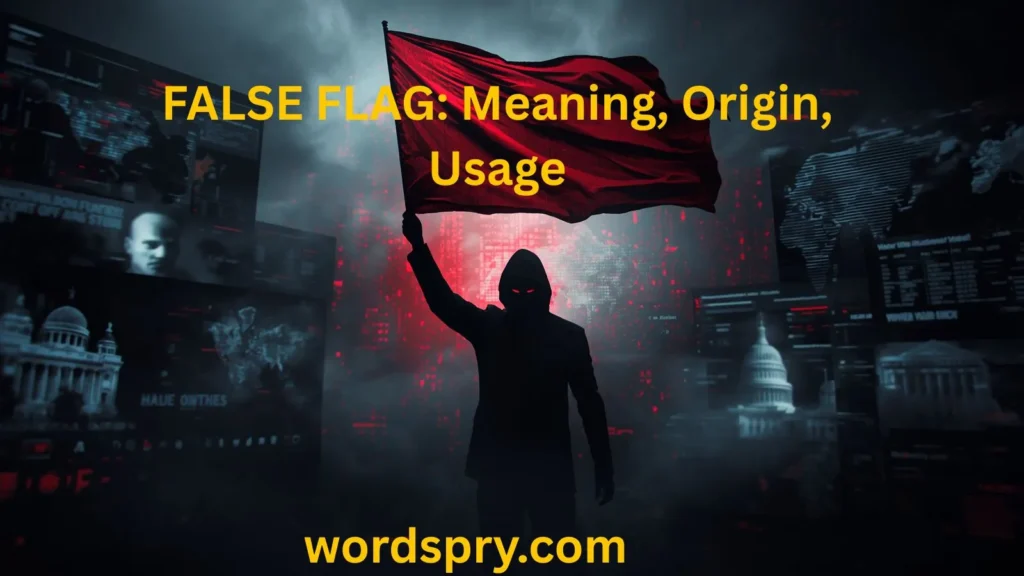
A false flag is a deceptive act designed to make it appear that someone else is responsible for an action. The phrase is commonly used in politics, military history, cybersecurity, and media analysis.
For example, a cyberattack that is intentionally disguised to look like it came from another country may be described as a deceptive operation of this type.
|Learn More: Childlike vs Childish: Meaning, Differences, and Correct Usage
Meaning of the Term
The expression refers to actions carried out under a fake identity or misleading appearance. Historically, ships used another nation’s banner to confuse enemies during conflict. Today, the phrase is more symbolic and often connected to misinformation or hidden agendas.
This concept usually involves:
- Secrecy and manipulation
- Strategic planning
- Misleading identity
- Psychological influence
A fake online campaign pretending to support a rival group is a simple modern example.
Why People Misspell the Phrase
English spelling often creates confusion, especially with repeated letters in words like “address”, “success,” and “committee.” While this phrase itself is not difficult, quick typing still causes mistakes.
Common typing errors include:
- “Fales flag”
- “Falsh flag”
- “False flg”
Origin and Etymology
The phrase dates back to naval warfare in the 1500s and 1600s. Ships sometimes sailed under another country’s banner to mislead opponents before revealing their true identity.
The word “false” comes from the Latin falsus, meaning deceptive or untrue. “Flag” has Germanic roots linked to banners or symbols used for communication. Over time, the expression moved beyond warfare into politics, journalism, and digital security discussions.
British vs American English
The spelling remains identical in all major English dialects. Unlike words such as “organise” and “organize,” there is no regional variation here.
| Language Style | Correct Form |
|---|---|
| British English | false flag |
| American English | false flag |
| Canadian English | false flag |
| Australian English | false flag |
This consistency makes the phrase easy to recognize internationally.
When to Use This Phrase
The term works well in both formal and informal writing. It often appears in:
- Academic essays
- News reports
- Political analysis
- Workplace discussions
- Legal documents
- Social media posts
Example:
- “The journalist examined deceptive wartime strategies.”
- “Experts discussed whether the cyberattack was intentionally misleading.”
Using the phrase carefully helps readers understand complicated situations involving deception.
Common Writing Mistakes
Writers sometimes combine the words incorrectly or miss letters while typing quickly. Careful proofreading can prevent these problems.
| Incorrect Version | Correct Version |
|---|---|
| Fales flag | false flag |
| FalseFlg | false flag |
| Falsh flag | false flag |
| False flagg | false flag |
Reading sentences aloud often helps identify typing errors more effectively.
Everyday Usage Examples
Emails
“Please review the report discussing the suspected deceptive operation.”
Social Media
“Many users debated whether the incident was intentionally staged.”
Professional Writing
“The analyst studied covert wartime tactics used throughout history.”
School Assignments
“Students researched historical cases involving misleading military operations.”
These examples show how naturally the expression fits into modern communication.
Usage Comparison Table
| Situation | Correct Sentence | Incorrect Sentence |
|---|---|---|
| Politics | “The article explored a deceptive operation.” | “The article explored a deceptive opertion.” |
| Cybersecurity | “Experts analyzed disguised hacking attempts.” | “Experts analyzed disgused hacking attempts.” |
| Legal context | “The evidence suggested deliberate deception.” | “The evidence sugested deliberate deception.” |
| Daily conversation | “Some people questioned the real source of the event.” | “Some people questioned the rel source of the event.” |
FAQs
What does the phrase mean?
It describes a deceptive action meant to shift blame or hide the real source of an event.
Is it one word or two?
It should always be written as two separate words.
Where is the term commonly used?
The phrase appears in politics, cybersecurity, journalism, history, and military discussions.
How can I remember the spelling?
Think of a ship using the wrong banner to hide its identity. That image makes the phrase easier to recall.
Is the spelling different in British English?
No. The spelling stays the same across major English dialects.
Why do people type it incorrectly?
Fast typing, skipped letters, and autocorrect mistakes are the most common reasons.
Can the term be used casually?
Yes. It appears in both serious discussions and informal online conversations.
Conclusion
This phrase has a long history rooted in naval warfare and deception. Today, it appears in discussions about politics, cybercrime, media narratives, and global events. Understanding its meaning and correct usage improves both academic and professional writing.
Writers should proofread carefully, avoid rushed typing, and remember that the expression is always written as two separate words. Small spelling improvements can make your communication look more polished and trustworthy.

Hi, I’m Victoria Lane, the voice behind Wordspry!
I’m passionate about helping students and readers master English grammar, vocabulary, and writing through simple, friendly, and easy-to-follow content.