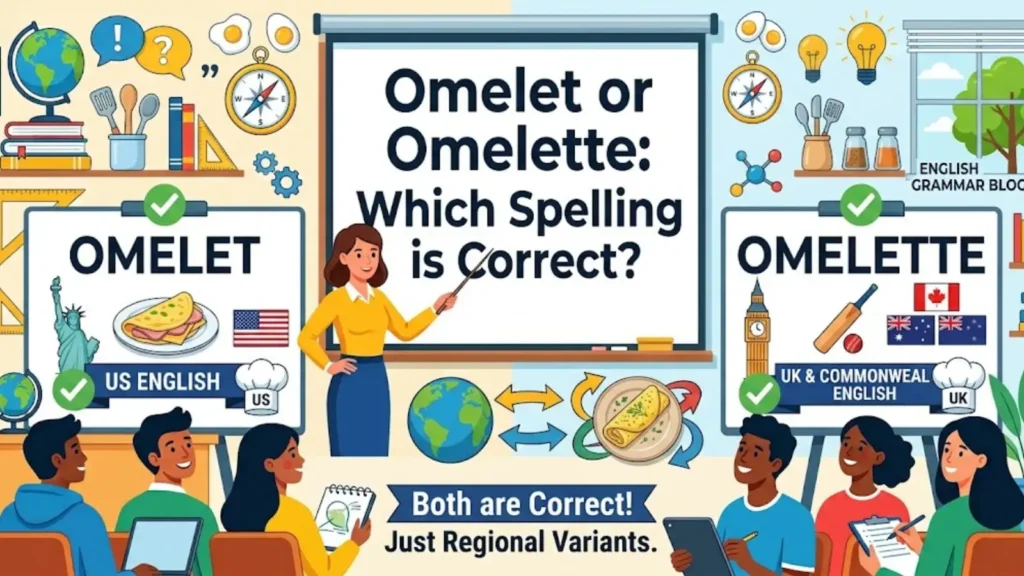
Have you ever wondered whether the correct spelling is omelet or omelette? If so, you are not alone. Both forms appear in cookbooks, restaurant menus, food blogs, and everyday writing. This can make a simple word feel confusing.
The good news is that both omelet and omelette are correct spellings. The main difference comes from regional English. Omelet is the common spelling in American English, while omelette is more common in British English and many other varieties of English.
People often search for this keyword because they want to know which spelling is correct, whether one form is wrong, and which version they should use in their own writing. Understanding this small spelling difference can help you write naturally for your audience.
We will explain the history of both spellings, compare American and British usage, show real-life examples, and answer common questions. By the end, choosing between omelet or omelette will be much easier.
RELATED: Stigmatism vs Astigmatism: Which Term Is Correct for the Eye Condition?
Omelet or Omelette – Quick Answer
Both omelet and omelette are correct.
- Omelet → Most common in American English.
- Omelette → Most common in British English and many Commonwealth varieties.
Examples
American English:
I ordered a cheese omelet for breakfast.
British English:
I ordered a cheese omelette for breakfast.
The meaning does not change. Both words describe a dish made mainly from beaten eggs that are cooked in a pan, often with fillings such as cheese, vegetables, meat, or herbs.
So, neither spelling is incorrect. Your choice mainly depends on the variety of English you are using.
The Origin of Omelet or Omelette
The word omelet/omelette has French roots. The modern English forms developed from the French word omelette.
The history of the word is interesting because its spelling changed as it moved between languages and regions. English adopted the French term, but American English later developed a shorter spelling: omelet.
The spelling omelette keeps the French-style ending -ette. British English generally kept this form.
American English often favors shorter or simpler spellings in some words. As a result, omelet became the standard American form.
This difference is similar to other spelling variations between American and British English. For example:
- color / colour
- center / centre
- theater / theatre
- traveler / traveller
- omelet / omelette
However, the difference in omelet or omelette is not a difference in meaning. Both forms refer to the same food.
British English vs American English Spelling
The biggest difference is regional preference.
In American English, omelet is the usual spelling. American newspapers, websites, restaurants, and recipe writers commonly use this form.
In British English, omelette is the traditional and more common spelling.
The same pattern is found in many countries influenced by British English. You are likely to see omelette in British, Australian, and other Commonwealth contexts, although individual usage can vary.
Comparison Table
| Feature | Omelet | Omelette |
|---|---|---|
| Main variety | American English | British English |
| Meaning | Egg dish | Egg dish |
| Spelling | Shorter | French-style |
| Common in the US | Yes | Less common |
| Common in the UK | Less common | Yes |
| Common in formal writing | Yes | Yes |
| Correct spelling | Yes | Yes |
| Pronunciation | Usually similar | Usually similar |
The important point is that both spellings are standard. The choice is mainly based on regional English and audience.
Which Spelling Should You Use?
Your audience should guide your choice.
If You Write for Americans
Use omelet.
For example:
The restaurant serves a delicious vegetable omelet.
If your website targets readers in the United States, using omelet will generally look more natural.
If You Write for British Readers
Use omelette.
For example:
She made a mushroom omelette for breakfast.
This spelling fits British English conventions.
If You Write for Commonwealth Audiences
Omelette is often a natural choice in British-influenced varieties of English, including many Commonwealth contexts.
However, local usage can differ. When writing for a specific country, it is useful to follow the spelling style commonly used by that audience.
If You Write for a Global Audience
Either spelling can work. The most important thing is consistency.
Do not randomly switch between:
cheese omelet
and:
cheese omelette
throughout the same article unless you are specifically discussing the spelling difference.
Common Mistakes with Omelet or Omelette
Although the two spellings are both correct, writers can still make mistakes when using them.
Mistake 1: Saying Omelette Is Wrong
Some writers believe that omelette is incorrect because they have learned American English.
That is not true.
Correct:
She cooked an omelette.
Mistake 2: Saying Omelet Is Wrong
The opposite mistake also happens.
Some British English users may think omelet is simply misspelled. However, omelet is a standard American English spelling.
Correct:
He ordered a ham omelet.
Mistake 3: Mixing Regional Styles
Switching between regional spellings can make writing look inconsistent.
Less consistent:
We serve cheese omelets and vegetable omelettes.
More consistent:
We serve cheese omelets and vegetable omelets.
Or, in British style:
We serve cheese omelettes and vegetable omelettes.
Mistake 4: Adding Unnecessary Letters
Do not create forms such as:
❌ omeletteh
❌ omelete
❌ omelettee
Use one of the two standard forms:
✓ omelet
✓ omelette
Omelet or Omelette in Everyday Examples
The word appears in many types of everyday writing.
In Emails
American English:
Hi Sarah,
I would like a vegetable omelet for breakfast.
British English:
Hi Sarah,
I would like a vegetable omelette for breakfast.
In News Writing
An American publication may write:
The chef prepared a large cheese omelet for the guests.
A British publication may write:
The chef prepared a large cheese omelette for the guests.
On Social Media
Both forms can appear naturally:
Sunday breakfast: homemade cheese omelet! 🍳
or:
Sunday breakfast: homemade cheese omelette! 🍳
Social media is less formal, so regional spelling preferences may vary.
In Formal Writing
For formal writing, choose the spelling that matches your chosen English style.
American style:
The breakfast menu includes a vegetable omelet.
British style:
The breakfast menu includes a vegetable omelette.
In Restaurant Menus
Restaurants usually follow the spelling style of their country or brand.
For example:
Cheese Omelet
Mushroom Omelet
Western Omelet
An American menu is likely to prefer omelet.
A British menu may use:
Cheese Omelette
Mushroom Omelette
Herb Omelette
Omelet or Omelette – Google Trends & Usage Data
Search interest can vary by country because English spelling differs across regions.
In the United States, omelet is generally the more familiar spelling. In the United Kingdom and other regions influenced by British English, omelette is more commonly seen.
Google Trends can help show these regional patterns because it compares search interest rather than simply counting every search equally. Search results can also change over time based on food trends, recipes, restaurants, and seasonal interest.
It is important to remember that Google Trends data represents relative search interest, not a direct count of how many people use each spelling.
For content creators, this means regional targeting matters. A food website aimed at US readers may naturally use omelet, while a UK-focused website may prefer omelette.
Regional Spelling Comparison
| Region or Style | Common Form |
|---|---|
| United States | Omelet |
| United Kingdom | Omelette |
| American English | Omelet |
| British English | Omelette |
| Many Commonwealth contexts | Omelette |
| International English | Either, depending on style |
If you are writing for search engines, do not force both spellings into every paragraph. Use the form that naturally fits your audience and topic.
Omelet vs Omelette: Side-by-Side Comparison
| Omelet | Omelette |
|---|---|
| American spelling | British spelling |
| Shorter form | Longer form |
| Common in US English | Common in UK English |
| Same meaning | Same meaning |
| Correct spelling | Correct spelling |
| Used for the same egg dish | Used for the same egg dish |
| Suitable for US-focused content | Suitable for UK-focused content |
The key difference is spelling preference, not meaning.
What People Ask About Omelet or Omelette
1. Is omelet or omelette correct?
Both omelet and omelette are correct. Omelet is more common in American English, while omelette is more common in British English.
See also: Hierarchical vs Hierarchal: Which Word Should You Use?
2. Is omelette British or American?
Omelette is traditionally associated with British English and also reflects the French spelling.
3. Is omelet American English?
Yes. Omelet is the standard and widely used American English spelling.
4. Do omelet and omelette mean the same thing?
Yes. Both words describe the same type of egg dish. The spelling is different, but the meaning is essentially the same.
5. Which spelling should I use in the US?
Use omelet if you are following standard American English.
6. Which spelling should I use in the UK?
Use omelette if you are following standard British English.
7. Can I use both spellings in one article?
You can, but consistency is usually better. Choose the spelling that matches your target audience and use it throughout your main content.
Conclusion
The choice between omelet or omelette is simple once you understand the regional difference. Both spellings are correct, and both refer to the same delicious egg dish. The main distinction is the English variety being used.
Omelet is the standard form in American English. Omelette is more common in British English and many Commonwealth contexts. The longer form also reflects the word’s French origin.
If you are writing for an American audience, choose omelet. If your readers use British English, choose omelette. For a global audience, either form can work, but consistency is important.
Most importantly, do not treat one spelling as universally correct and the other as a mistake. Regional English naturally contains spelling differences. Understanding those differences helps you write more clearly and professionally.
So, whether you enjoy a cheese omelet or a cheese omelette, your spelling can be correct. Just choose the form that fits your audience and writing style.

Hi, I’m Liam Harper, the voice behind Wordspry!
I’m here to make English grammar simple, clear, and easy to understand for learners of all levels. Through practical lessons and helpful guides, I aim to help you improve your writing and communication skills with confidence.