Choosing between Waivered or Wavered can be confusing because the two words look almost identical. However, they have very different meanings. One is a common English verb, while the other is only used in limited legal or administrative contexts. Understanding the difference helps you avoid embarrassing writing mistakes in emails, reports, assignments, and professional documents.
Quick Answer
The correct word depends on your meaning.
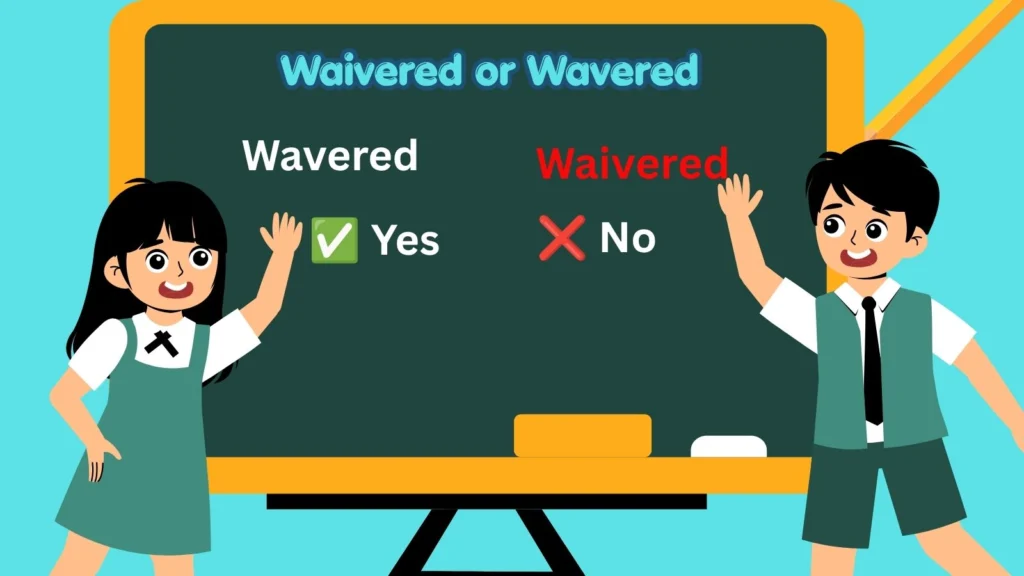
- Wavered means hesitated, became uncertain, or moved back and forth.
- Waivered is not a standard English verb in everyday writing. It sometimes appears in legal or sports administration to mean someone signed or was placed on a waiver, but most dictionaries do not recommend it for general use.
If you’re talking about hesitation or uncertainty, wavered is almost always the correct choice.
Meaning of Waivered and Wavered
Understanding the meaning of Waivered or Wavered makes choosing the right word much easier.
Wavered
Wavered is the past tense of waver. It describes someone who becomes uncertain, changes their mind, or moves unsteadily.
Examples:
- She wavered before accepting the job.
- His confidence wavered during the interview.
- The candle flame wavered in the wind.
Waivered
Waivered comes from the noun waiver. In legal, insurance, or sports contexts, it can describe someone who has signed a waiver or has been placed on waivers. However, many style guides prefer phrases like signed a waiver or was placed on waivers instead.
Examples:
- The athlete was placed on waivers.
- Every participant signed a waiver before entering the race.
Why People Confuse Waivered or Wavered
Many writers confuse Waivered or Wavered because the words differ by only one letter.
English contains many words with similar spellings that have different meanings. Consider these examples:
- address
- success
- necessary
- committee
Double letters often create confusion. Fast typing, autocorrect, and pronunciation make mistakes even more common.
For example, someone might accidentally write:
❌ He waivered before answering.
The correct sentence is:
✅ He wavered before answering.
Origin of Waivered and Wavered
Knowing where these words come from makes their meanings easier to remember.
| Word | Origin | Meaning |
|---|---|---|
| Waver | Middle English, influenced by Old English and Germanic languages | To move unsteadily or become uncertain |
| Waiver | Anglo-French weiver, later influenced by legal English | A voluntary giving up of a right |
Although both words share historical French influences, they developed into completely different parts of English.
- Wavered relates to uncertainty.
- Waivered relates to legal rights or administrative procedures.
British vs American English
One helpful fact about Waivered or Wavered is that the spelling remains consistent in both British and American English.
| English Version | Correct Spelling |
|---|---|
| American English | Wavered |
| British English | Wavered |
| American Legal Usage | Waiver, sometimes waivered |
| British Legal Usage | Usually waiver or signed a waiver |
Unlike words such as organisation/organization, there is no spelling difference between British and American English for wavered.
When to Use Waivered or Wavered
Use each word according to its meaning.
Use Wavered in:
- essays
- school assignments
- emails
- work reports
- stories
- casual conversations
- professional writing
Examples
- My decision wavered after reading the reviews.
- She wavered during the debate.
- Public support wavered over time.
Use Waivered only in specialized situations
Mainly in:
- legal documents
- sports management
- insurance paperwork
- administrative records
Example:
- The player was waivered by the team.
Many editors still recommend writing:
The player was placed on waivers.
Common Mistakes
Here are common mistakes involving Waivered or Wavered.
| Incorrect | Correct |
|---|---|
| He waivered before speaking. | He wavered before speaking. |
| She waivered between two choices. | She wavered between two choices. |
| The decision wavered on legal rights. | The legal rights were covered by a waiver. |
Other common mistakes include:
- typing too quickly
- relying on autocorrect
- assuming every word ending in “-er” forms the same past tense
- confusing legal vocabulary with everyday English
Everyday Examples
Here are practical examples of Waivered or Wavered in daily life.
I wavered before sending the proposal.
Social Media
I almost booked the trip but wavered at the last minute.
Professional Writing
Investor confidence wavered after the announcement.
School Assignment
The main character wavered between honesty and ambition.
Legal Document
Every participant signed a waiver before joining the activity.
Usage Comparison Table
| Situation | Correct Sentence | Incorrect Sentence |
|---|---|---|
| Decision | She wavered before answering. | She waivered before answering. |
| Confidence | His confidence wavered. | His confidence waivered. |
| Legal Form | Everyone signed a waiver. | Everyone signed a waver. |
| Sports | The player was placed on waivers. | The player wavered by the team. |
| Daily Speech | I wavered for a moment. | I waivered for a moment. |
| Professional Report | Customer confidence wavered. | Customer confidence waivered. |
| Legal Rights | The company required a waiver. | The company required a waver. |
Tips to Remember
Remember this simple trick:
- Waver = hesitate.
- Waiver = legal permission or giving up a right.
Think of someone waving back and forth when they cannot decide. That image helps you remember wavered.
Frequently Asked Questions
Is waivered a real word?
Yes, but it appears mainly in legal, insurance, and sports administration. It is uncommon in everyday English.
Which is correct: waivered or wavered?
If you mean hesitation or uncertainty, wavered is correct.
What does wavered mean?
It means becoming uncertain, hesitating, or moving unsteadily.
Is waivered accepted in dictionaries?
Some dictionaries recognize it in specialized legal or sports contexts, but many style guides prefer phrases like signed a waiver or placed on waivers.
How do I remember the spelling?
Remember:
- Waver = hesitate
- Waiver = legal document
Link wavered with changing your mind.
Can I use waivered in essays?
Generally, no. Unless you’re discussing legal or sports administration, wavered is usually the correct choice.
Does British English spell wavered differently?
No. Both British and American English use wavered with the same spelling.
Conclusion
The difference between Waivered or Wavered is simple once you know their meanings. Wavered is the everyday verb that describes hesitation, uncertainty, or unsteady movement. Waivered, on the other hand, belongs mostly to legal and sports terminology and rarely appears in general writing. Whenever you’re writing essays, emails, reports, or casual messages, wavered is almost always the correct choice. A useful memory tip is to connect wavered with someone moving back and forth while making a decision. That simple image will help you choose the right word every time.

Hi, I’m William Parker, the creator behind Wordspry.com
I enjoy breaking down complex grammar rules into clear and practical lessons that help learners write and speak English more effectively.