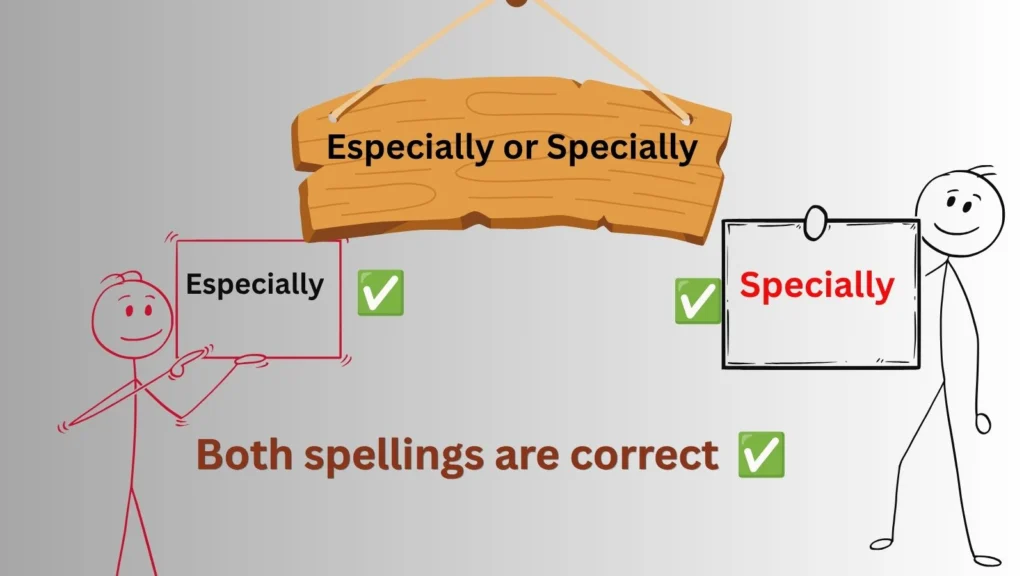
Both “especially” and “specially” are correct English words, but they have different meanings and should not be used interchangeably.✅
Imagine you are buying a birthday gift for your best friend. You might say, “I chose this gift especially for you.” However, if the gift was made only for your friend, you would say it was specially made for them. Although the words look alike, they are used in different situations.
Many English learners mix up these words because they sound similar and both come from the word “special.” Grammar rules, English vocabulary, word usage, and common English mistakes often make this pair confusing. Fortunately, the difference is simple once you understand the meaning behind each word. In this guide, you’ll learn when to use especially and specially, see clear examples, discover an easy memory trick, and avoid one of the most common spelling and grammar mistakes in English.
RELATED: Childlike vs Childish: Meaning, Differences, and Correct Usage
What Is the Difference Between Especially and Specially?
The words especially and specially are both correct, but they do different jobs.
- Especially means particularly, above all, or more than others.✅
- Specially means for a specific purpose or made in a special way.✅
So, neither word is wrong. The correct choice depends on what you want to say.
For example:
- I especially enjoy reading mystery books.✅
- This cake was specially baked for the wedding.✅
Knowing this difference improves your English grammar, writing skills, word choice, and language learning.
When to Use Especially
Use especially when you want to show that something is more important, more noticeable, or more enjoyable than other things.
It often means:
- Particularly
- Above all
- More than anything else
Examples
- I especially like chocolate ice cream.✅
- She was especially kind to the new student.✅
- ✅We visit the beach especially during summer.
- This lesson is especially useful for beginners.✅
The word comes from the Latin root meaning “particular” or “distinct.” Over time, it became common in English to emphasize one thing over another. Today, it appears frequently in formal writing, daily conversation, English expressions, and academic writing.
See also: Casi Algo Meaning: Full Guide to Love, Feelings, and Relationships
When to Use Specially
Use specially when something is created, designed, or prepared for a particular purpose.
It usually means:
- For a special reason
- Made specifically for someone or something
- Designed for a particular purpose
Examples
- This chair was specially designed for children.✅
- The meal was specially prepared for the guests.✅
- These shoes are specially made for runners.
- The room was specially decorated for the celebration.✅
You will often see specially in product descriptions, technical writing, business English, and instruction manuals because it focuses on purpose or design.
Usage Comparison: Especially vs. Specially
Although both words are correct, especially is used much more often in everyday English.
People commonly use especially when giving opinions, adding emphasis, or talking about favorites.
Specially, however, appears mainly when discussing something made, prepared, or arranged for a particular purpose.
Simple Comparison
| Especially | Specially |
|---|---|
| Means “particularly” | Means “for a special purpose” |
| Very common | Less common |
| Shows emphasis | Shows purpose or design |
| Used in daily speech | Used in specific situations |
Because of its wider meaning, especially appears more often in English writing, spoken English, vocabulary building, and grammar practice.
Pronunciation Guide
Especially
Pronunciation:
ih-SPESH-uh-lee
Specially
Pronunciation:
SPESH-uh-lee
A common mistake is saying both words exactly the same. The extra sound at the beginning of especially (“ih”) helps distinguish it from specially.
Practicing the pronunciation improves your English speaking, pronunciation skills, accent practice, and language fluency.
Trick to Remember the Difference
Here’s an easy memory tip:
- Especially = Extra emphasis
- Specially = Special purpose
Think of it this way:
- If you’re talking about something you like more than the rest, use especially.
- If something is made for one purpose, use specially.
Example:
- I especially love pizza.
- This pizza was specially made without cheese.
This simple trick helps improve your English vocabulary, grammar memory, writing confidence, and language accuracy.
Summary
So, which word is correct?
The answer is both.
- Use especially when you mean particularly or more than others.
- Use specially when something is made or prepared for a specific purpose.
People often confuse these words because they sound similar and share the same root word. However, choosing the right one becomes easy once you remember the difference between emphasis and purpose. Learning this pair strengthens your English grammar, correct word usage, writing skills, and communication.
FAQs
1. Is especially correct?
Yes. Especially is a correct English word that means particularly or more than others.
2. Is specially correct?
Yes. Specially is also correct. It means made or intended for a specific purpose.
3. Why do people confuse especially and specially?
They sound similar, share the same root word, and are both related to the idea of something being special. This often causes grammar confusion, word choice errors, English learning mistakes, and spelling confusion.
4. How do you remember the correct usage?
Remember:
- Especially = Extra emphasis
- Specially = Special purpose
This quick rule works in most situations.
5. Can both especially and specially be used in English?
Yes. Both are correct English words. The important thing is choosing the one that matches the meaning of your sentence.

Hi, I’m William Parker, the creator behind Wordspry.com
I enjoy breaking down complex grammar rules into clear and practical lessons that help learners write and speak English more effectively.