
Quick Answer
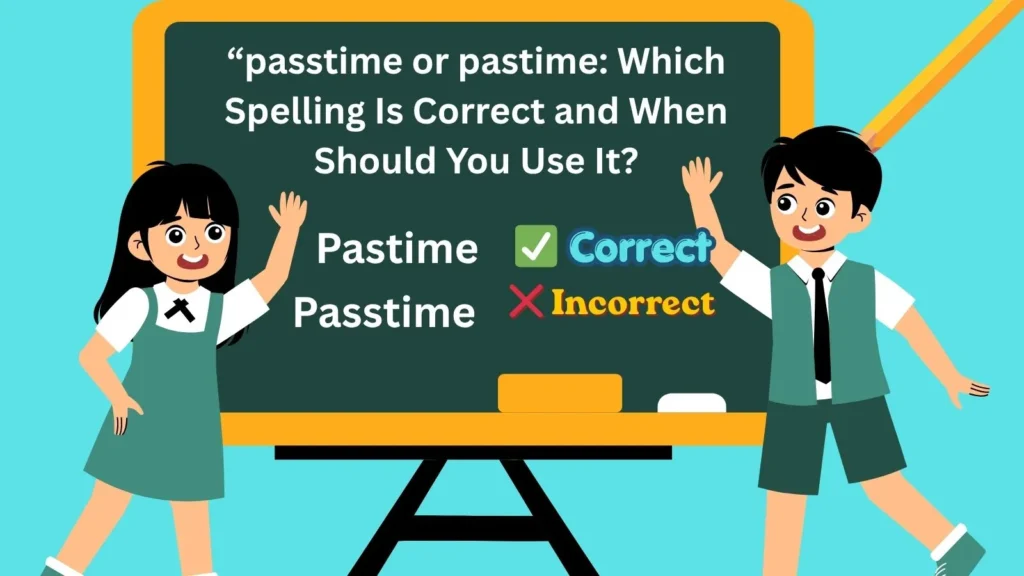
The correct spelling is “pastime.” ❌ Passtime is incorrect and not recognized in standard English dictionaries. A pastime is an activity you enjoy doing in your free time, such as reading, painting, or playing sports. Many people mistakenly write “passtime” because of confusion about double letters in English spelling.
✔️ Correct: Pastime
❌ Incorrect: Passtime
Example:
- ✔️ Reading is my favorite pastime.
- ❌ Reading is my favorite passtime.
RELATED: Gumba vs Goomba: Which Spelling Is Correct and When Should You Use It?
Meaning of “Pastime”
A pastime is a hobby or enjoyable activity people do to relax or entertain themselves. The word combines “past” and “time,” meaning something that helps pass the time pleasantly.
People use pastime to describe activities involving creativity, skills, or relaxation. Common examples include gardening, gaming, cooking, and sports.
Examples:
- Fishing is a relaxing pastime for many people.
- Her favorite pastime is painting landscapes.
- Watching movies became a weekend pastime.
Unlike ownership or legal terms, pastime refers to enjoyable free-time activities rather than control or authority.
Why People Misspell “Passtime or Pastime”
Many English learners type “passtime” because English spelling rules can feel inconsistent. Words like “address,” “success,” and “misspell” contain double letters, so writers sometimes assume pastime should also have two “s” letters.
Typing quickly also causes spelling mistakes. Since “pass” is a familiar word, people naturally combine it with “time” and create passtime by accident.
Examples of similar confusion:
- ✔️ Address / ❌ Adress
- ✔️ Success / ❌ Sucess
- ✔️ Pastime / ❌ Passtime
Remember: pastime only has one “s.”
Origin of “Pastime”
The word pastime dates back to Middle English. It originally meant “something that passes time pleasantly.” The term combines:
- Past → from the verb “to pass”
- Time → free or spare time
Its roots trace to older Germanic and Latin influences connected to time and activities. Over centuries, English speakers kept the spelling consistent as pastime.
Writers have used pastime since the 15th century to describe hobbies, games, and enjoyable leisure activities.
British vs American English
The spelling stays the same in both British and American English. There is no regional difference.
| English Variant | Correct Spelling | Incorrect Spelling |
|---|---|---|
| British English | Pastime ✔️ | Passtime ❌ |
| American English | Pastime ✔️ | Passtime ❌ |
| Canadian English | Pastime ✔️ | Passtime ❌ |
| Australian English | Pastime ✔️ | Passtime ❌ |
No major English dictionary accepts passtime.
When to Use “Pastime”
Use pastime whenever you talk about hobbies, entertainment, or enjoyable activities.
Common Situations
- Essays and school assignments
- Emails and casual messages
- Work reports discussing hobbies
- Social media captions
- Articles and blogs
- Daily conversation
Examples:
- Traveling is a popular pastime among young people.
- Chess became his favorite indoor pastime.
- Teachers often ask students about their hobbies and pastimes.
Common Mistakes
People often make spelling errors because they type too quickly or confuse similar-looking words.
| Mistake | Correct Form |
|---|---|
| Passtime | Pastime ✔️ |
| Past-time | Pastime ✔️ |
| Pass time (as noun) | Pastime ✔️ |
Correct vs Incorrect Examples
✔️ Swimming is a healthy pastime.
❌ Swimming is a healthy passtime.
✔️ Writing poetry is her favorite pastime.
❌ Writing poetry is her favorite passtime.
A quick memory trick:
Think of “pastime” as “an activity to pass time.”
Everyday Examples
People use pastime in many real-life situations.
Emails
- Reading novels is my favorite pastime after work.
Social Media
- Hiking has become my new weekend pastime.
Professional Writing
- Employers sometimes ask applicants about hobbies and pastimes.
School Assignments
- Students often write essays about their favorite pastime.
These examples show how naturally the word fits everyday communication.
Usage Comparison Table
| Situation | Correct Usage | Incorrect Usage |
|---|---|---|
| Daily speech | Music is my favorite pastime. | Music is my favorite passtime. |
| School writing | Drawing is a creative pastime. | Drawing is a creative passtime. |
| Professional writing | Golf is a common executive pastime. | Golf is a common executive passtime. |
| Social media | Cooking is my relaxing pastime. | Cooking is my relaxing passtime. |
| Hobby discussion | Reading books is a peaceful pastime. | Reading books is a peaceful passtime. |
FAQs
Is “passtime” a real word?
No. Passtime is a misspelling. The correct word is pastime.
What does “pastime” mean?
A pastime is a hobby or enjoyable activity done during free time.
Why do people write “passtime”?
People confuse it with words containing double letters, such as success or address.
Is “pastime” one word or two?
It is one word: pastime.
How can I remember the correct spelling?
Think of it as “passing time pleasantly.” That helps you remember the single “s.”
Is “pastime” used in formal writing?
Yes. You can use pastime in essays, reports, and professional communication.
Do British and American English spell it differently?
No. Both use the spelling pastime.
Conclusion
The spelling “pastime” is always correct, while “passtime” is a common mistake. A pastime refers to an enjoyable hobby or activity people do during free time. Although many English words contain double letters, this word uses only one “s.”
To avoid errors, remember the phrase “passing time.” That simple connection makes the spelling easier to recall. Whether you are writing essays, emails, work reports, or social media posts, using pastime correctly improves your writing and makes it look more professional.
The next time you type the word, remember:
✔️ Pastime
❌ Passtime

Hi, I’m Liam Harper, the voice behind Wordspry!
I’m here to make English grammar simple, clear, and easy to understand for learners of all levels. Through practical lessons and helpful guides, I aim to help you improve your writing and communication skills with confidence.
Pingback: Demur vs. Demure: Meaning, Differences, Examples, and Common Mistakes - wordspry.com
Pingback: Bear with Me or Bare with Me: Which Is Correct? - wordspry.com
Pingback: Colonel vs Colonella: Meaning, Spelling, and Correct Usage - wordspry.com