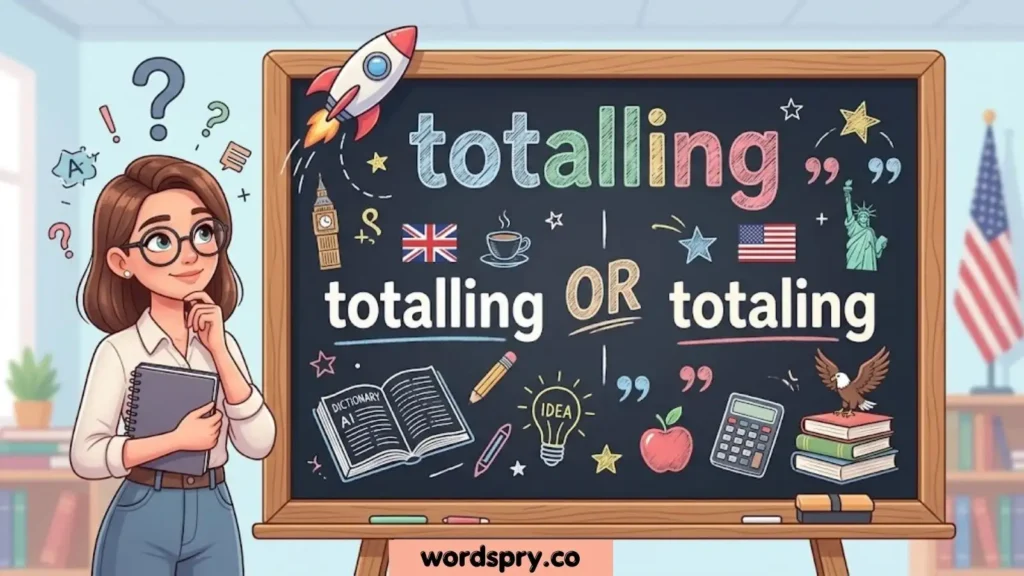
If you have ever wondered whether totalling or totaling is the correct spelling, you are not alone. Both forms are used in English, and the difference mainly depends on which variety of English you are writing.
The good news is that both “totalling” and “totaling” are correct spellings. “Totalling” is the standard form in British English and other varieties that generally follow British spelling conventions, while “totaling” is preferred in American English.
RELATED: Stigmatism vs Astigmatism: Which Term Is Correct for the Eye Condition?
What Does Totalling or Totaling Mean?
Totalling and totaling are the present participle forms of the verb total.
The verb total means to add numbers together and calculate their combined amount. It can also mean to reach a particular amount or, in informal contexts, to completely destroy something.
For example:
- The expenses are totalling £500.
- The expenses are totaling $500.
- We are totalling the costs before submitting the report.
- We are totaling the costs before submitting the report.
In these examples, the meaning is exactly the same. The spelling changes according to the variety of English being used.
Totalling in British English
Totalling is the preferred spelling in British English.
It is commonly used in the United Kingdom and in writing systems influenced by British English.
Examples:
- The expenses are totalling £2,000.
- We are totalling the scores.
- The bills are totalling more than expected.
- She spent the afternoon totalling the company’s expenses.
Totaling in American English
Totaling is the preferred spelling in American English.
American English commonly drops the second l when adding a suffix beginning with a vowel to words such as total.
Examples include:
- The expenses are totaling $2,000.
- We are totaling the scores.
- The bills are totaling more than expected.
- The accountant is totaling the monthly expenses.
Totalling or Totaling: The Main Difference
The primary difference is regional spelling, not meaning or grammar.
| Spelling | Preferred English | Example |
|---|---|---|
| Totalling | British English | The costs are totalling £1,000. |
| Totaling | American English | The costs are totaling $1,000. |
Neither spelling is inherently more correct than the other. The best choice depends on your target audience and the spelling convention you are following.
If you are writing for a British audience, use totalling. If your audience primarily uses American English, use totaling.
Why Does “Totalling” Have Two Ls?
The difference comes from spelling conventions used when adding suffixes to words ending in a consonant.
In British English, the final consonant is often doubled in certain words before adding endings such as -ing.
This produces:
- total → totalling
- travel → travelling
- cancel → cancelling
- model → modelling
American English often uses a different convention:
- total → totaling
- travel → traveling
- cancel → canceling
- model → modeling
However, spelling rules can vary depending on the word, pronunciation, and language variety, so it is not always safe to assume that every word follows exactly the same pattern.
Is Totalling or Totaling More Correct?
Neither spelling is universally more correct.
Totalling is correct according to standard British English spelling conventions, while totaling is correct according to standard American English conventions.
The important thing is consistency.
For example, if your article uses British spellings such as:
- colour
- organise
- travelling
- centre
then totalling is usually the better choice.
If your content uses American spellings such as:
- color
- organize
- traveling
- center
then totaling is usually more appropriate.
Mixing British and American spelling in the same professional document can make your writing look inconsistent.
How to Use Totalling in a Sentence
The word totalling can be used in several sentence structures.
Example 1: Adding Numbers
The accountant is totalling the figures.
Here, totalling describes the action of adding several numbers together.
Example 2: Describing a Combined Amount
The invoices are totalling £4,500.
Here, totalling tells us that the combined value of the invoices is £4,500.
Example 3: Business Context
The company received five orders, totalling £10,000.
This construction is common in financial and business writing.
Example 4: Academic Context
The study included 250 participants, totalling 125 men and 125 women.
In this context, the word helps describe the combined number represented by the figures.
How to Use Totaling in a Sentence
The American spelling totaling works in exactly the same grammatical situations.
For example:
The accountant is totaling the figures.
The invoices are totaling $4,500.
The company received five orders, totaling $10,000.
The survey included 250 participants, totaling 125 men and 125 women.
The meaning does not change when the second l is removed.
Totalling vs. Totaling in Business Writing
Choosing the right spelling is particularly important in professional communication.
Businesses often prepare:
- Financial reports
- Invoices
- Sales summaries
- Expense reports
- Budget documents
- Tax documents
- Emails
- Presentations
If your company follows British English, use totalling throughout these documents.
For an American company or American audience, totaling is generally the preferred form.
For international organizations, the most important consideration is often the organization’s established style guide. Following one spelling convention consistently is better than switching between forms.
Totalling or Totaling in Academic Writing
Academic writers should also pay attention to regional spelling.
Universities, journals, and publishers may specify whether authors should use British or American English. If a style guide is provided, follow it.
For example, a British-style research paper might say:
The results were based on 1,500 observations, totalling 750 responses from each group.
An American-style paper could use:
The results were based on 1,500 observations, totaling 750 responses from each group.
Both sentences communicate the same information.
Common Mistakes to Avoid
Mistake 1: Thinking One Spelling Is Always Wrong
A common misconception is that totalling is a spelling mistake because American English uses totaling.
That is incorrect. Both forms are standard.
Mistake 2: Mixing Spelling Conventions
Using totalling in one paragraph and totaling in another can make your document inconsistent.
Choose one variety of English and use it consistently.
Mistake 3: Confusing Total With Totalling
The word total can function as a noun, adjective, or verb.
For example:
- The total cost is $500.
- The damage was total.
- We need to total the figures.
- We are totaling the figures.
Understanding the grammatical role of the word makes it easier to use the correct form.
Mistake 4: Assuming the Difference Changes the Meaning
The additional l does not change the meaning.
Totalling and totaling both mean essentially the same thing when used as the present participle of total.
Totalling or Totaling: Quick Comparison
Here is a simple comparison to remember the difference:
British English:
The expenses are totalling £3,000.
American English:
The expenses are totaling $3,000.
Meaning: The combined expenses amount to 3,000 units of currency.
The spelling changes, but the grammar and meaning remain the same.
Professional Tips for Choosing the Right Spelling
If you are unsure which version to use, consider your audience first.
1. Identify Your Target Audience
Ask whether your readers primarily use British or American English.
For a UK-based website, totalling is generally the better choice.
For a US-focused website, totaling is generally preferable.
2. Check Your Organization’s Style Guide
Many companies and publications have established editorial standards.
If your organization has a style guide, follow its preferred spelling.
3. Stay Consistent
Consistency is more important than choosing one variety simply because you personally prefer it.
Once you select British or American English, apply that choice throughout the document.
4. Consider Search Intent
When writing online content, you may encounter searches for both “totalling or totaling” and related queries such as “totaling vs totalling.”
Including both forms naturally can help readers who use different spelling conventions while keeping the article useful and clear.
Frequently Asked Questions
Is “totalling” correct?
Yes. Totalling is the standard British English spelling of the present participle of total.
Is “totaling” correct?
Yes. Totaling is the standard American English spelling.
What is the difference between totalling and totaling?
The difference is primarily regional spelling. Totalling is preferred in British English, while totaling is preferred in American English.
Which spelling should I use in the UK?
Use totalling when following standard British English spelling conventions.
Which spelling should I use in the USA?
Use totaling when following standard American English conventions.
Does totalling mean the same as totaling?
Yes. Both forms have the same meaning when used as the present participle of the verb total.
Is “totalling” a British spelling?
Yes. Totalling is commonly used in British English and other varieties that follow British spelling conventions.
Is “totaling” an American spelling?
Yes. Totaling is the standard form generally preferred in American English.
Conclusion
So, totalling or totaling—which one should you use? The answer depends on your variety of English.
Totalling is the preferred British English spelling, while totaling is the preferred American English spelling. Both are grammatically correct and carry the same meaning.
If you are writing for a UK audience, choose totalling. If you are writing for a US audience, choose totaling. Most importantly, maintain consistency throughout your writing.
Understanding this small spelling difference is useful for students, teachers, researchers, editors, business professionals, and anyone who wants to produce polished English content. When in doubt, identify your audience and follow the spelling conventions appropriate for them

Hi, I’m Henry Collins, the educator behind Wordspry.com
I’m dedicated to helping English learners build confidence through easy grammar explanations, writing tips, and everyday language learning resources.