Have you ever written a sentence like, “The school welcomed hundreds of freshman,” and then paused for a second? Something feels slightly off, yet many people still make this mistake every day.
The confusion between freshmen or freshman happens because the words look almost identical. However, one small letter changes the meaning completely. In grammar, tiny details often shape the clarity of your writing. A misplaced plural can make a sentence sound awkward, especially in academic or professional communication.
Imagine inviting “student” to a party when you actually mean “students.” The message still makes sense, but it sounds incomplete. The same thing happens with freshman and freshmen.
Students, bloggers, teachers, and even experienced writers sometimes mix these terms. Since schools, universities, and sports teams use them frequently, correct usage matters more than people think.
See more: Instalments or Installments: Which Spelling Is Correct?
The Core Difference Between Freshmen and Freshman
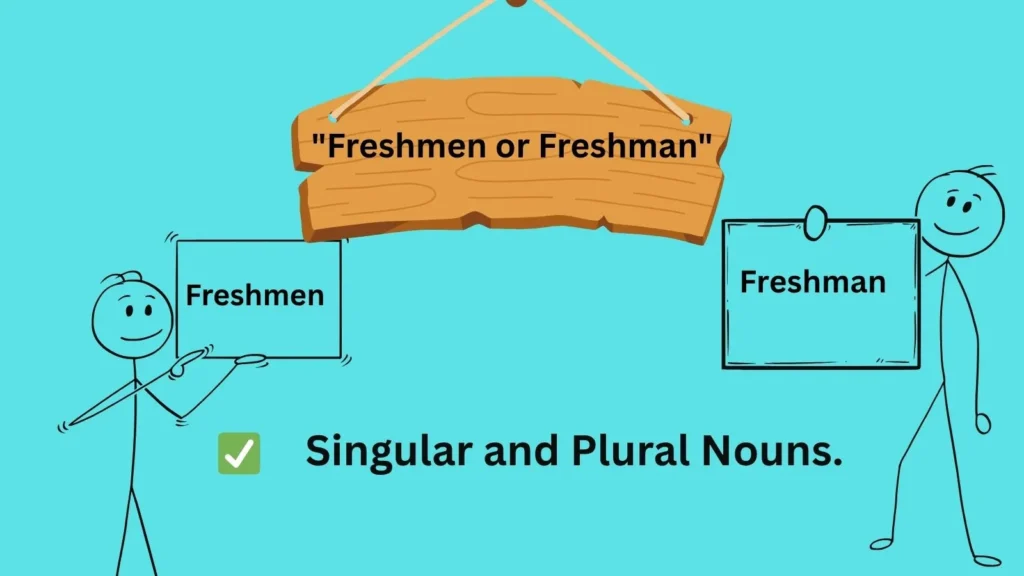
The difference comes down to singular and plural nouns.
- Freshman = one first-year student
- Freshmen = more than one first-year student
Think of it this way:
| Word | Meaning | Number |
|---|---|---|
| Freshman | One new student | Singular |
| Freshmen | Multiple new students | Plural |
Simple Examples
- The freshman looked nervous on the first day.
- The freshmen filled the football stadium.
The rule sounds easy, yet many people accidentally use freshman for both singular and plural situations. That mistake appears often in casual speech, social media captions, and even advertisements.
Use “Freshman” When…
Use freshman when you talk about one person.
This word describes a single first-year student in high school or college.
Correct Examples
- My brother is a freshman at college.
- The freshman asked the teacher for directions.
- One freshman joined the debate team yesterday.
- Sarah felt excited as a freshman entering university.
Common Contexts
You often see freshman in:
- School introductions
- University applications
- Student profiles
- Sports team announcements
Easy Tip
If you can replace the word with student, use freshman.
- One student = one freshman
Use “Freshmen” When…
Use freshmen when you talk about two or more students.
This plural form refers to groups of first-year students.
Correct Examples
- The freshmen attended orientation together.
- Hundreds of freshmen moved into dormitories last week.
- The coach welcomed the new freshmen players.
- Several freshmen joined the science club.
Everyday Situations
You may hear freshmen used during:
- Graduation speeches
- Campus tours
- School newsletters
- Student events
Easy Tip
If you can replace the word with students, use freshmen.
- Multiple students = freshmen
Understanding the Grammar Rule
English changes many nouns from singular to plural by adding -s. However, freshman follows an irregular pattern.
Singular to Plural Rule
| Singular | Plural |
|---|---|
| Man | Men |
| Woman | Women |
| Freshman | Freshmen |
Notice the pattern:
- “man” changes to “men”
- “freshman” also changes to “freshmen”
This irregular structure causes confusion because writers expect a normal plural form like “freshmans.” However, English does not work that way here.
Sentence Structure Table
| Incorrect | Correct |
|---|---|
| Three freshman arrived early. | Three freshmen arrived early. |
| One freshmen spoke first. | One freshman spoke first. |
The noun must match the number in the sentence.
Why These Words Confuse People
Several reasons explain the confusion.
1. They Sound Similar
Freshman and freshmen sound almost identical during fast conversation. Many people never notice the spelling difference until they write the words.
2. English Has Irregular Plurals
English contains many unusual plural forms.
For example:
- Tooth → Teeth
- Goose → Geese
- Man → Men
Since freshman follows the same pattern, learners sometimes forget the rule.
3. Social Media Encourages Informal Writing
People often skip grammar checks online. As a result, incorrect forms spread quickly across captions, tweets, and comments.
4. The Brain Focuses on Meaning First
Psychologically, readers process meaning before grammar. Therefore, many writers overlook the plural mistake because the sentence still feels understandable.
Meaning and Definition
What Does “Freshman” Mean?
A freshman is a first-year student in high school or college.
It functions mainly as a noun.
Example
- The freshman carried a campus map.
Sometimes people also use it as an adjective.
Example
- Freshman orientation starts Monday.
What Does “Freshmen” Mean?
Freshmen means multiple first-year students.
It works only as a plural noun.
Example
- The freshmen gathered outside the auditorium.
Unlike freshman, freshmen rarely acts as an adjective.
Side-by-Side Examples Table
| Incorrect Sentence | Correct Sentence |
|---|---|
| The freshman are excited. | The freshmen are excited. |
| One freshmen forgot his ID. | One freshman forgot his ID. |
| Several freshman joined today. | Several freshmen joined today. |
| A freshmen asked for help. | A freshman asked for help. |
| The freshmen student spoke loudly. | The freshman student spoke loudly. |
Memory Trick That Actually Works
Here’s a simple trick students remember easily.
The “Man to Men” Analogy
- One man → two men
- One freshman → two freshmen
The ending changes the same way.
Picture a single student standing alone. Now imagine a whole crowd entering campus together. The crowd becomes freshmen.
This visual memory method works surprisingly well during exams and proofreading.
Common Grammar Mistakes
People repeat certain errors again and again.
Mistake 1: Using Freshman as a Plural
❌ The freshman walked into the gym.
✅ The freshmen walked into the gym.
Mistake 2: Using Freshmen for One Person
❌ Jake is a freshmen this year.
✅ Jake is a freshman this year.
Mistake 3: Confusing Adjective Usage
❌ Freshmen orientation begins tomorrow.
✅ Freshman orientation begins tomorrow.
Why? Because freshman acts like an adjective here.
Everyday Conversation Examples
School
- The freshman looked nervous before class.
- The freshmen explored the campus together.
Work
- Our internship program welcomes college freshmen.
- One freshman intern impressed the manager.
Relationships
- My cousin became a freshman this fall.
- The freshmen formed friendships quickly.
Social Media
- “College life starts today for this freshman!”
- “The freshmen survived orientation week.”
Emails
- “Please guide the new freshmen during registration.”
- “A freshman requested additional information.”
Professional Writing Examples
Correct grammar matters even more in professional settings.
Blogs
- “Tips Every College Freshman Should Know”
News Headlines
- “University Welcomes Thousands of Freshmen”
Product Reviews
- “Best Laptop Choices for a College Freshman”
Academic Writing
- “Researchers surveyed 500 incoming freshmen.”
Professional writing demands accuracy because grammar affects credibility.
Search Intent and SEO Relevance
Why do people search “freshmen or freshman” online?
Usually, they want:
- Quick grammar clarification
- Better academic writing
- Improved blog content
- Professional communication help
- Search-engine-friendly writing
Many writers worry about sounding careless. Even a small grammar mistake can weaken trust, especially in essays, resumes, or educational content.
Google also values readable and accurate writing. Clear grammar improves user experience, which supports stronger SEO performance.
Therefore, understanding the difference helps both readers and search rankings.
Quick Editing Checklist
Before publishing or submitting your writing, ask yourself these questions:
- Does the sentence mention one student or many?
- Can I replace the word with “student” or “students”?
- Does the verb match the noun?
- Am I using freshman as an adjective correctly?
- Did autocorrect accidentally change the form?
A quick review catches most mistakes instantly.
Popular Idioms or Expressions
Although freshman and freshmen rarely appear in classic idioms, several common expressions use these words naturally.
Common Phrases
- Freshman year
- Freshman orientation
- Freshman class
- Freshman experience
- Incoming freshmen
Example Sentences
- Freshman year often feels overwhelming.
- Incoming freshmen received welcome packages.
These phrases appear constantly in academic settings.
Mini Case Study: A Real-Life Writing Scenario
A university blogger once published this headline:
“Freshman Share Their First-Day Experiences”
The article discussed interviews with twelve students. Readers noticed the grammar mistake immediately because the headline used the singular form instead of the plural.
After editing the title to:
“Freshmen Share Their First-Day Experiences”
the article looked more polished and professional.
This small correction improved reader trust and strengthened the publication’s credibility.
Tiny grammar choices create surprisingly large impressions.
How Teachers Explain It
Many teachers use a staircase analogy.
The Staircase Method
Imagine one student climbing the first step.
That student is a freshman.
Now picture many students climbing together.
They become freshmen.
Teachers also connect the rule with man/men because students already recognize that pattern.
This visual approach helps learners remember the spelling naturally instead of memorizing random rules.
Practical Tips for Students
Learning grammar becomes easier with repetition and pattern recognition.
Helpful Study Techniques
Read Sentences Aloud
Your ears often catch grammar problems faster than your eyes.
Use Flashcards
Write:
- freshman = one
- freshmen = many
Practice Daily Writing
Create five sentences using each word correctly.
Notice Real Examples
Pay attention to school websites, university brochures, and news articles.
Use Comparison Learning
Connect freshman/freshmen with:
- woman/women
- man/men
Pattern learning improves memory retention.
Why Correct Usage Matters
Some people think small grammar mistakes do not matter. However, correct usage affects communication more than expected.
Clarity
Readers understand your message faster.
Professionalism
Correct grammar makes writing appear polished and trustworthy.
Academic Success
Teachers often notice repeated grammar mistakes in essays.
Confidence
When you know grammar rules clearly, writing feels easier and smoother.
Better First Impressions
Correct language strengthens emails, applications, and presentations.
In short, precise grammar builds credibility.
Final Quick Reference Table
| Situation | Correct Word |
|---|---|
| One first-year student | Freshman |
| Multiple first-year students | Freshmen |
| Adjective before a noun | Freshman |
| Group noun usage | Freshmen |
Fast Reminder
- One = freshman
- Many = freshmen
Conclusion
The difference between freshmen or freshman becomes simple once you understand the singular and plural rule. Use freshman for one first-year student and freshmen for a group of students. Although the words sound similar, their meanings change based on number.
English contains many irregular plurals, so this confusion happens naturally. Still, consistent practice makes the rule easier to remember. The man-to-men pattern offers a helpful shortcut because freshman follows the same structure.
Whether you write essays, blog posts, emails, or social media captions, correct grammar strengthens clarity and professionalism. Small adjustments often create stronger communication.
The next time you write about school life, orientation week, or college experiences, you’ll know exactly which word belongs in the sentence. That confidence alone makes your writing sharper and more polished.
FAQs
Is freshman singular or plural?
Freshman is singular. It refers to one first-year student.
Is freshmen grammatically correct?
Yes. Freshmen is the correct plural form of freshman.
Can I say “two freshman”?
No. You should say “two freshmen.”
Why does freshman change to freshmen?
The word follows the same irregular plural pattern as man/men.
Is “freshman year” correct?
Yes. Freshman works as an adjective in the phrase “freshman year.”
Do colleges still use the word freshman?
Many schools still use it, although some prefer gender-neutral terms like “first-year student.”
What is another word for freshman?
Common alternatives include:
- First-year student
- New student
- Incoming student
Which word appears more in academic writing?
Both appear often, but the correct choice depends on whether the noun is singular or plural.

Hi, I’m Liam Harper, the voice behind Wordspry!
I’m here to make English grammar simple, clear, and easy to understand for learners of all levels. Through practical lessons and helpful guides, I aim to help you improve your writing and communication skills with confidence.