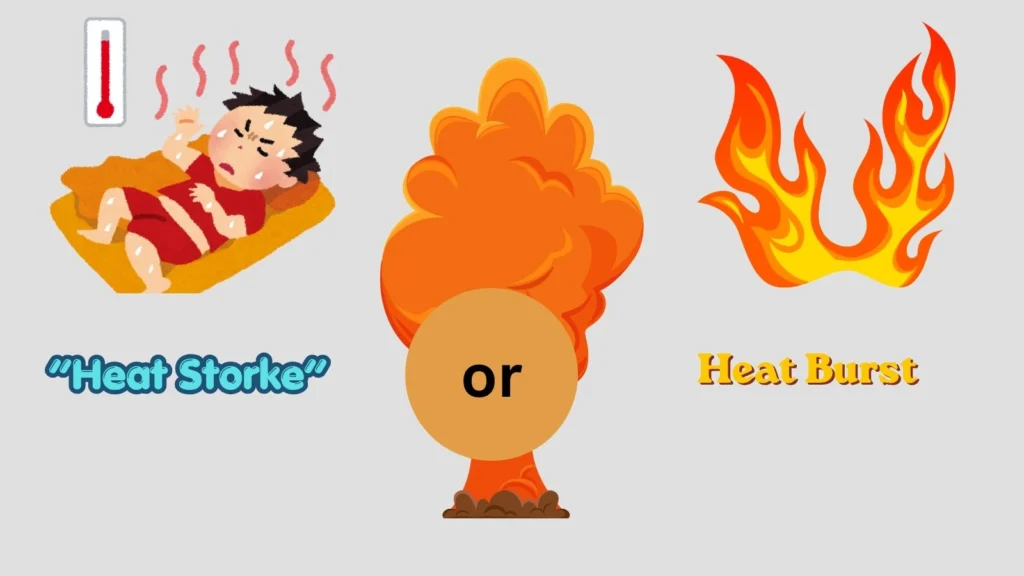
Extreme heat can affect both people and the environment, but not every heat-related term means the same thing. Two phrases that often confuse readers are heat stroke and heat burst. They sound similar, yet they describe completely different events. Heat stroke is a serious medical emergency that happens when the body’s temperature rises to dangerous levels. Heat burst, on the other hand, is a rare weather event that causes a sudden rise in air temperature.
Many people search for “heat stroke vs heat burst” because they hear these terms during hot summer months or while reading weather reports. Understanding the difference is important. One term is related to human health and requires immediate medical attention, while the other belongs to meteorology and describes unusual atmospheric conditions.
See also: Choir vs Chorus: What’s the Difference and Which Word Should You Use?
Heat Stroke vs Heat Burst – Quick Answer
The difference is simple.
- Heat stroke is a life-threatening medical condition caused by the body overheating.
- Heat burst is a rare weather phenomenon in which temperatures suddenly rise because warm, dry air rushes downward from a weakening thunderstorm.
One affects people, while the other affects the weather.
What Is Heat Stroke?
Heat stroke is the most severe form of heat-related illness. It happens when the body’s cooling system fails, causing the core body temperature to rise above 104°F (40°C).
Without immediate treatment, heat stroke can damage the brain, heart, kidneys, and other organs. It can even become fatal.
Common Causes
- Long exposure to high temperatures
- Heavy physical activity in hot weather
- Dehydration
- Wearing thick or heavy clothing
- Poor air circulation
Symptoms
- Body temperature above 104°F (40°C)
- Hot, red, or dry skin
- Fast heartbeat
- Severe headache
- Dizziness
- Confusion
- Slurred speech
- Fainting
- Seizures
First Aid
- Call emergency medical services immediately.
- Move the person to a cool place.
- Remove extra clothing.
- Cool the body with wet towels, cold water, or ice packs.
- Do not delay medical treatment.
What Is Heat Burst?
A heat burst is a rare weather event that usually occurs at night after a thunderstorm begins to weaken.
As rain evaporates before reaching the ground, cool air sinks rapidly. During its descent, the air becomes compressed and warms quickly. By the time it reaches the surface, it can create a sudden spike in temperature along with very dry air and strong winds.
Heat bursts usually last from a few minutes to about an hour.
Characteristics
- Sudden temperature increase
- Very low humidity
- Strong gusty winds
- Often occurs at night
- Associated with weakening thunderstorms
Unlike heat stroke, a heat burst is not a disease or medical condition.
Heat Stroke vs Heat Burst: Key Differences
| Feature | Heat Stroke | Heat Burst |
|---|---|---|
| Type | Medical emergency | Weather phenomenon |
| Affects | Humans | Atmosphere |
| Cause | Body overheats | Descending warm, dry air |
| Danger | Can be fatal | Usually affects weather conditions |
| Treatment | Emergency medical care | No medical treatment needed |
| Duration | Until treated | Minutes to one hour |
| Occurs | During extreme heat or exercise | During weakening thunderstorms |
Causes of Heat Stroke
Heat stroke develops when the body cannot cool itself.
Common risk factors include:
- High outdoor temperatures
- Intense exercise
- Lack of fluids
- Alcohol consumption
- Certain medications
- Older adults
- Young children
- Chronic illnesses
People working outdoors during summer face a higher risk.
Causes of Heat Burst
Heat bursts develop under very specific weather conditions.
These include:
- A thunderstorm losing strength
- Rain evaporating before reaching the ground
- Rapidly descending air
- Compression warming the air
- Dry atmospheric conditions
Because all these conditions must happen together, heat bursts remain uncommon.
Can a Heat Burst Cause Heat Stroke?
Indirectly, yes.
A heat burst may suddenly raise outdoor temperatures and reduce humidity. If people remain outside without drinking water or seeking shade, the hotter conditions can increase the risk of heat-related illnesses, including heat stroke.
However, the heat burst itself does not cause heat stroke. Heat stroke develops only when a person’s body temperature rises beyond safe limits.
How to Prevent Heat Stroke
Preventing heat stroke is much easier than treating it.
Stay Hydrated
Drink water regularly, even if you do not feel thirsty.
Avoid Peak Heat
Limit outdoor activities during the hottest part of the day.
Wear Light Clothing
Loose, breathable clothing helps the body cool naturally.
Take Breaks
Rest in shaded or air-conditioned places.
Watch Vulnerable People
Children, older adults, and pets need extra care during heat waves.
Can Heat Bursts Be Predicted?
Meteorologists can sometimes identify weather patterns that favor heat bursts, but predicting the exact time and location remains difficult.
Since heat bursts are rare and short-lived, they often surprise both weather experts and local communities.
Modern weather radar and forecasting tools have improved detection, but accurate prediction is still challenging.
Common Misconceptions
Myth 1: Heat stroke and heat burst are the same.
Fact: One is a medical emergency, while the other is a weather event.
Myth 2: Heat bursts happen every summer.
Fact: They are uncommon and require very specific atmospheric conditions.
Myth 3: Heat stroke only affects athletes.
Fact: Anyone exposed to excessive heat can develop heat stroke.
Myth 4: Drinking water instantly cures heat stroke.
Fact: Heat stroke requires emergency medical treatment.
Real-Life Examples
Heat Stroke Example
A construction worker spends several hours working under the hot afternoon sun without enough water. He becomes confused, collapses, and is diagnosed with heat stroke.
Heat Burst Example
Late at night, residents notice the temperature suddenly rises by 15°F while strong, hot winds blow through the area after a thunderstorm weakens. Meteorologists identify the event as a heat burst.
Which Term Should You Use?
Use heat stroke when discussing:
- Medical emergencies
- Human health
- Heat illness
- Emergency treatment
- Summer safety
Use heat burst when discussing:
- Weather
- Meteorology
- Thunderstorms
- Climate observations
- Atmospheric science
Knowing the difference helps you communicate clearly.
Frequently Asked Questions
Is heat stroke the same as a heat burst?
No. Heat stroke is a dangerous medical condition, while heat burst is a rare weather phenomenon.
Can a heat burst happen during the day?
Yes, but most heat bursts occur at night after thunderstorms weaken.
What is the main symptom of heat stroke?
A body temperature above 104°F (40°C) along with confusion, dizziness, and loss of consciousness.
Are heat bursts dangerous?
Most heat bursts are not directly dangerous, but they can produce strong winds and sudden temperature changes.
Can children get heat stroke?
Yes. Children are more vulnerable because their bodies do not regulate heat as efficiently as adults.
Is heat stroke preventable?
Yes. Staying hydrated, avoiding excessive heat exposure, and resting in cool places greatly reduce the risk.
Why do people confuse heat stroke and heat burst?
The names sound similar and both involve extreme heat, but they belong to completely different fields.
Conclusion
Although heat stroke and heat burst both involve high temperatures, they are entirely different concepts. Heat stroke is a life-threatening medical emergency that occurs when the body overheats and can no longer regulate its temperature. It requires immediate medical care to prevent serious complications. Heat burst, in contrast, is a rare weather phenomenon caused by descending warm, dry air from weakening thunderstorms. While a heat burst can briefly increase outdoor temperatures and contribute to uncomfortable conditions, it is not a disease or medical emergency. Understanding these differences helps you use each term correctly and avoid confusion. Whether you are discussing health, weather, or writing educational content, knowing the proper meaning of each term ensures clear and accurate communication.

Hi, I’m Victoria Lane, the voice behind Wordspry!
I’m passionate about helping students and readers master English grammar, vocabulary, and writing through simple, friendly, and easy-to-follow content.