Have you ever written “cache” when you meant “cachet”, or vice versa? You are not alone. These two words look similar and sound somewhat alike, but they have completely different meanings. Because of their spelling, many English learners and even native speakers confuse them.
Using the wrong word can change the meaning of your sentence. For example, saying a luxury brand has “cache” instead of “cachet” sounds incorrect, while talking about clearing your browser “cachet” instead of “cache” is also a mistake.
This guide explains the difference between cache or cachet in simple English. You’ll learn what each word means, where it comes from, how to use it correctly, and how to remember the difference with easy examples.
Cache or Cachet – Quick Answer
The difference is simple:
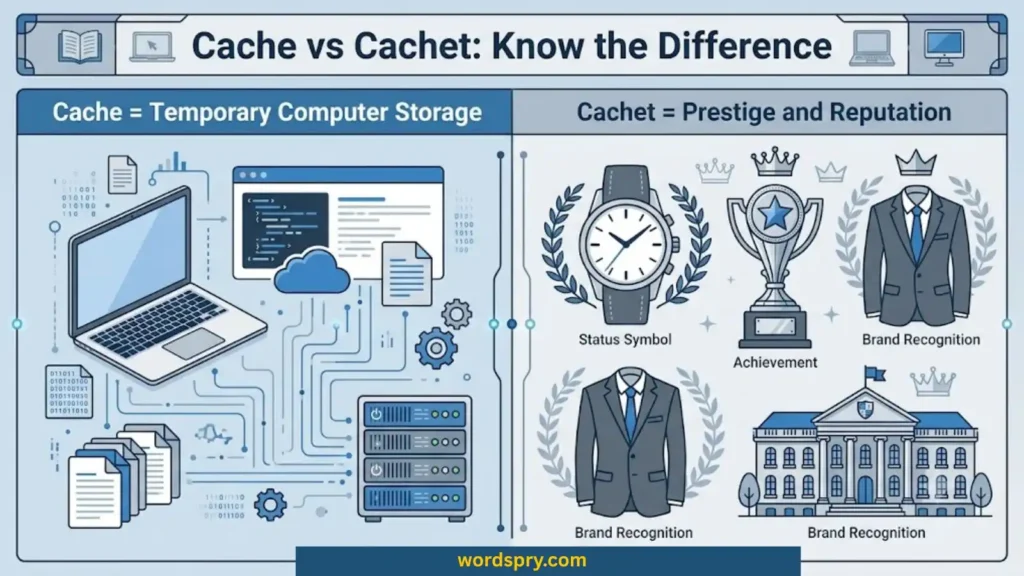
- Cache means a hidden storage place or temporary storage for data on a computer.
- Cachet means prestige, status, or a mark of quality and distinction.
Examples
✅ I cleared my browser cache to fix the loading issue.
✅ Owning that luxury watch gives the brand extra cachet.
Tip: If you are talking about computers or hidden supplies, use cache. If you are talking about reputation or prestige, use cachet.
What Does “Cache” Mean?
The word cache has two common meanings.
The first meaning refers to a hidden place where items are stored. People may hide food, tools, money, or emergency supplies in a cache.
The second and more common meaning today relates to computers. A cache stores temporary data so a device or website can load faster the next time you use it.
Examples of “Cache”
- I cleared the browser cache after the website stopped working.
- The app saves files in the cache for quicker access.
- The hikers found a hidden cache of food.
- The game stores images in its cache.
- Emptying the cache solved the loading problem.
In technology, cache improves speed by saving frequently used information.
What Does “Cachet” Mean?
The word cachet refers to prestige, distinction, reputation, or special appeal. Something with cachet is respected, admired, or considered high quality.
Luxury brands, famous universities, exclusive clubs, and award-winning restaurants often have cachet because people see them as prestigious.
Examples of “Cachet”
- The award added cachet to her career.
- That neighborhood has a lot of cachet.
- The university enjoys international cachet.
- Handmade furniture has a unique cachet.
- Working for that company carries professional cachet.
Whenever you mean status or prestige, cachet is the correct word.
The Origin of Cache and Cachet
Although the words look alike, they developed differently over time.
Origin of Cache
Cache comes from the French word cacher, meaning to hide.
English adopted the word to describe hidden supplies or secret storage. Later, computer science borrowed it to describe temporary storage that “hides” data for faster access.
Origin of Cachet
Cachet also comes from French, where it originally referred to an official seal or stamp.
Over time, its meaning expanded to include prestige, distinction, and social status because official seals represented authority and quality.
Today, English speakers mainly use cachet to describe something respected or admired.
Cache vs Cachet: Key Differences
| Feature | Cache | Cachet |
|---|---|---|
| Meaning | Hidden storage or temporary computer memory | Prestige, reputation, or distinction |
| Common Use | Technology, computing, hidden supplies | Reputation, luxury, quality |
| Part of Speech | Noun | Noun |
| Origin | French cacher (“to hide”) | French cachet (“seal” or “official mark”) |
| Example | Clear your browser cache. | The award gives her cachet. |
The easiest way to remember them is to think about the topic. If you are discussing technology, the correct word is usually cache. If you are discussing reputation or social standing, choose cachet.
How to Pronounce Cache and Cachet
These words sound similar, but their pronunciation is different.
Cache
Pronounced:
KASH
It rhymes with cash.
Examples:
- Browser cache
- Memory cache
- Hidden cache
Cachet
Pronounced:
Ka-SHAY
The final “tay” sound makes it different from cache.
Examples:
- Brand cachet
- Social cachet
- Artistic cachet
Listening to the pronunciation a few times can help you avoid confusing these words in conversation.
When to Use “Cache”
Use cache whenever you are talking about hidden storage or temporary computer files.
Common situations include:
- Clearing browser data
- Smartphone apps
- Website loading
- Gaming
- Computer memory
- Hidden emergency supplies
Sentences
- Delete your browser cache before troubleshooting.
- My phone’s cache uses too much storage.
- The website loads faster because of its cache.
- The campers kept a hidden cache of food.
- The software updates the cache automatically.
In technology articles, cache appears far more often than cachet.
When to Use “Cachet”
Use cachet whenever you mean prestige, reputation, exclusivity, or respect.
It often appears in discussions about:
- Luxury brands
- Fashion
- Universities
- Careers
- Business
- Fine dining
- Art
Sentences
- The designer label has worldwide cachet.
- Winning the competition increased his professional cachet.
- That hotel has international cachet.
- The historic building adds cachet to the neighborhood.
- Speaking at the conference gave her extra cachet.
Unlike cache, cachet rarely appears in technology writing.
Common Examples in Everyday English
Here are a few examples that show the difference clearly.
Correct
- Clear your browser cache.
- This luxury car has enormous cachet.
- The app stores images in its cache.
- The award gave the company more cachet.
- The hikers discovered a hidden cache of supplies.
Incorrect
- ❌ Clear your browser cachet.
- ❌ This designer handbag has plenty of cache.
Both sentences use the wrong word because the meanings do not match the context.
(End of Part 1 — Part 2 will include common mistakes, memory tricks, related words, FAQs, conclusion, SEO meta description, URL slug, and a feature image prompt.)
part2
Common Mistakes People Make
Because cache and cachet share similar spellings and both come from French, many writers accidentally swap them. However, they are never interchangeable.
Here are the most common mistakes.
Mistake 1: Using cache to mean prestige
❌ The famous university has a lot of cache.
✅ The famous university has a lot of cachet.
Mistake 2: Using cachet for computer storage
❌ Clear your browser cachet.
✅ Clear your browser cache.
Mistake 3: Assuming they are spelling variations
Unlike color and colour, these are different words with different meanings.
Easy Memory Trick
A simple memory trick can help you remember the difference forever.
Remember “Cache”
Think of computer cache.
If the sentence talks about technology, files, speed, or hidden storage, use cache.
Think: Cache = Computer.
Remember “Cachet”
Think of fashion or luxury.
Prestigious brands, exclusive places, and respected people have cachet.
Think: Cachet = Class.
Words Related to Cache
These words have meanings similar to cache.
- Hidden storage
- Stash
- Reserve
- Stockpile
- Store
- Repository
- Memory
- Temporary storage
Example
The browser keeps a temporary cache to improve performance.
Words Related to Cachet
These words are similar to cachet.
- Prestige
- Reputation
- Status
- Distinction
- Respect
- Recognition
- Influence
- Appeal
Example
Winning the international award gave the company greater cachet.
Cache vs Cachet in Technology and Business
Understanding the context makes choosing the right word much easier.
In Technology
Use cache because it refers to stored data.
Examples:
- Browser cache
- CPU cache
- Cache memory
- Application cache
In Business
Use cachet when talking about reputation or brand value.
Examples:
- Brand cachet
- Luxury cachet
- Professional cachet
- Market cachet
The topic usually tells you which word fits best.
Practice Sentences
Choose the correct word.
- I cleared the browser ______ before logging in.
✅ cache
- The luxury hotel has international ______.
cachet✅
- The game stores images in its ______.
cache✅
- Winning the award added ______ to the designer’s career.
✅ cachet
- The hikers discovered a hidden ______ of supplies.
✅ cache
Frequently Asked Questions
Is it cache or cachet?
It depends on the meaning. Use cache for hidden storage or computer data. Use cachet for prestige, reputation, or distinction.
Is cache pronounced like cash?
Yes. Cache is pronounced “kash,” just like the word cash.
What does cachet mean?
Cachet means prestige, status, respect, or a mark of distinction.
Can cache and cachet replace each other?
No. They have completely different meanings and should never be used interchangeably.
Why do people confuse cache and cachet?
They look similar, come from French, and have similar pronunciations. However, their meanings are unrelated.
Which word is common in technology?
Cache is extremely common in computing and web development. Cachet is rarely used in technical writing.
Final Thoughts
Although cache and cachet look alike, they serve very different purposes in English.
Use cache whenever you mean hidden storage or temporary computer memory. Use cachet whenever you mean prestige, reputation, or special status. Knowing this difference will make your writing clearer and more professional.
Whenever you are unsure, ask yourself a simple question: Am I talking about technology or reputation? If it is technology, choose cache. If it is prestige or distinction, choose cachet. That simple habit will help you avoid this common mistake every time.

Hi, I’m Liam Harper, the voice behind Wordspry!
I’m here to make English grammar simple, clear, and easy to understand for learners of all levels. Through practical lessons and helpful guides, I aim to help you improve your writing and communication skills with confidence.