Ever sent someone a nervous “I’ve got my driving test today,” only to get a quick “Good luck!” in return? Or maybe you spotted someone typing GL in a gaming chat and wondered, “Wait… does that mean good luck or something else?” It’s easy to overthink internet messages, especially when people shorten everything into two or three letters. Is it just a polite phrase, a supportive message, or part of online gaming culture?
In this guide, you’ll discover the Good Luck meaning in text, where the phrase came from, how people use it across different platforms, common misunderstandings, similar internet slang, and the best ways to reply. By the end, you’ll know exactly when—and how—to use it naturally.
RELATED: SYFM Meaning in Text: What It Means, and How to Use It
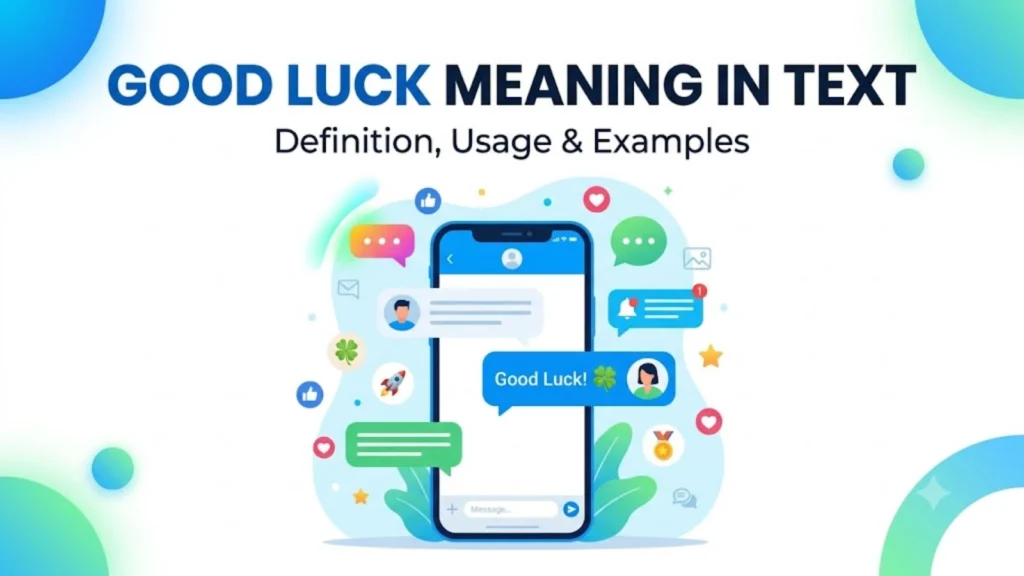
What Does Good Luck Mean?
Good Luck is a phrase used to wish someone success, safety, or a positive outcome before an important event or challenge. In texting and online conversations, it expresses encouragement, kindness, and emotional support.
Unlike many internet abbreviations, GL is not rude or sarcastic by default. However, tone and context can sometimes change its meaning.
| Word | Meaning |
|---|---|
| Good | Positive or favorable |
| Luck | Success or fortune beyond one’s control |
Sometimes people shorten it to GL, especially in gaming and fast-paced online chats.
Texting Example
Friend: “I have my final exam tomorrow.”
You: “Good luck! You’ll do great! 🍀”
The message is warm, supportive, and encouraging.
Background & Origin of Good Luck
The phrase Good Luck has existed in English for centuries. People have long wished one another success before difficult tasks, competitions, journeys, or important life events.
As digital communication evolved, the phrase naturally became part of texting culture. Online gamers later shortened it to GL, especially before competitive matches.
Here’s how it spread online:
- Traditional English expression used for hundreds of years.
- Became common in emails and text messages.
- Popularized in multiplayer games through “GL HF”
- Frequently appears on Reddit, Discord, TikTok, Snapchat, Instagram, and Twitter/X.
- Remains one of the most positive phrases in internet communication.
Unlike many internet slang terms, GL didn’t originate online—it simply adapted to modern digital conversations.
Contexts Where Good Luck Is Commonly Used
In Serious Conversations
People use Good Luck before important moments.
Examples include:
- Job interviews
- Medical procedures
- Court hearings
- Exams
Example
“I know you’ve prepared hard. Good luck tomorrow!”
Between Friends
Friends often use it casually.
Example:
“I’m finally asking her out tonight.”
“Good luck! You got this 😂”
Online Gaming
Gamers usually type GL or GL HF before a match.
Example:
“GL everyone!”
It promotes sportsmanship.
Social Media
People comment “Good luck!” under posts announcing:
- Competitions
- Performances
- New businesses
- Challenges
Dating Apps
Someone might say:
“Good luck with your presentation today 😊”
It shows interest and support.
Usage Across Different Platforms
| Platform | Example | Notes |
|---|---|---|
| Good luck on your exam! | Very common | |
| Messenger | GL! | Casual |
| Discord | GL HF | Gaming culture |
| TikTok | Good luck in the comments! | Encouraging creators |
| Good luck ❤️ | Common on stories and posts | |
| Twitter/X | Good luck to the team tonight! | Frequently used |
| Snapchat | Good luck 🍀 | Friendly |
| Slack | Good luck with today’s meeting | Professional and acceptable |
| Microsoft Teams | Good luck with the presentation | Workplace friendly |
Common Misconceptions About Good Luck
1. It Always Refers to Luck
Not really.
Most people simply use it to encourage someone, regardless of whether they believe in luck.
2. It’s Only Used Before Exams
No.
People say Good Luck before interviews, competitions, surgeries, performances, travel, and countless other situations.
3. It’s Internet Slang
Actually, no.
It’s a traditional English expression that became popular online—not the other way around.
Common Mistakes When Using Good Luck
Avoid these common mistakes:
- Using it sarcastically without clear context.
- Forgetting punctuation in professional emails.
- Assuming “GL” works in formal business communication.
- Overusing it in every message.
- Misreading a joking tone as genuine support.
Similar Slang, Acronyms & Alternatives
| Acronym | Meaning | When to Use It |
|---|---|---|
| GL | Good Luck | Gaming and texting |
| GL HF | Good Luck, Have Fun | Before online games |
| BOL | Best of Luck | Slightly more formal |
| HF | Have Fun | Gaming and casual chats |
| ATB | All The Best | Exams, interviews, work |
How to Respond to GL
Funny Reply
“I’ll need all the luck I can get 😂”
Friendly Reply
“Thanks so much!”
Serious Reply
“I really appreciate your support.”
Flirty Reply
“I’ll do my best… now I have to impress you 😉”
Emoji Reply
🍀😊❤️🙌🤞
Good Luck in Different Languages & Cultures
| Language | Common Expression |
|---|---|
| Spanish | Buena suerte |
| Arabic | حظًا سعيدًا |
| Hindi | शुभकामनाएँ |
| Urdu | نیک تمنائیں / گڈ لک |
| Tagalog | Good luck is commonly used alongside local phrases |
| Tamil | குட் லக் or local equivalent |
| Malayalam | ഗുഡ് ലക്ക് or native expressions |
| Marathi | शुभेच्छा |
English “GL” is widely understood around the world, especially online.
Difference Between Good Luck and Similar Acronyms
| Phrase | Difference |
|---|---|
| Good Luck | General encouragement |
| Best of Luck | Slightly more formal |
| GL | Short internet version |
| GL HF | Used before online games |
| Fingers Crossed | Hoping for success rather than directly wishing it |
Each phrase shares a positive tone but fits different situations.
Good Luck in Online Conversations & Social Media
You’ll frequently see Good Luck in:
- TikTok comments
- Instagram Stories
- Discord gaming chats
- Reddit discussions
- Facebook posts
- Snapchat messages
- Online competitions
- Livestream chats
Content creators often receive thousands of “Good lucks!” comments before contests, performances, or product launches.
In gaming, GL HF remains one of the most recognizable expressions of good sportsmanship.
Popularity & Trends Over Time
| Period | Trend |
|---|---|
| 2010–2015 | Widely used in texting and Facebook |
| 2016–2020 | Expanded across Discord, Reddit, and gaming |
| 2021–Present | Continues growing on TikTok, Instagram, and online communities |
Although many internet slang terms come and go, GL remains timeless because every generation needs encouragement.
Trusted References
For reliable language definitions and usage, consult:
- Cambridge Dictionary
- Merriam-Webster Dictionary
- Oxford Learner’s Dictionary
- Dictionary.com
- Know Your Meme (for gaming and internet culture references)
FAQs
What does Good Luck mean in text?
It means you’re wishing someone success or hoping things go well for them. It’s a supportive and encouraging expression.
Is Good Luck rude?
No. It’s almost always friendly and positive unless used sarcastically.
What does GL mean in texting?
GL stands for Good Luck. It’s commonly used in texting, gaming, and online chats.
Can I use Good Luck professionally?
Yes. It’s appropriate in emails, workplace chats, presentations, interviews, and business communication.
Why do gamers say GL HF?
GL HF means Good Luck, Have Fun. Players use it before matches to show respect and encourage friendly competition.
Is GL popular on TikTok?
Yes. Users frequently comment “Good luck!” on challenge videos, competitions, auditions, and milestone posts to show support.
Conclusion
Good Luck is much more than a simple phrase—it’s a universal way to encourage someone before an important moment. Whether it’s written in full or shortened to GL, the message carries positivity, kindness, and hope for success. From exam halls and job interviews to gaming tournaments and TikTok challenges, people use it every day to lift others up.
While internet slang changes quickly, Good Luck has remained timeless because encouragement never goes out of style. The key is understanding the context, choosing the right version for the situation, and responding with genuine appreciation. So the next time someone wishes you GL, smile, say thanks, and give it your best shot—because a little encouragement can go a long way. 🍀

Hi, I’m Victoria Lane, the voice behind Wordspry!
I’m passionate about helping students and readers master English grammar, vocabulary, and writing through simple, friendly, and easy-to-follow content.